
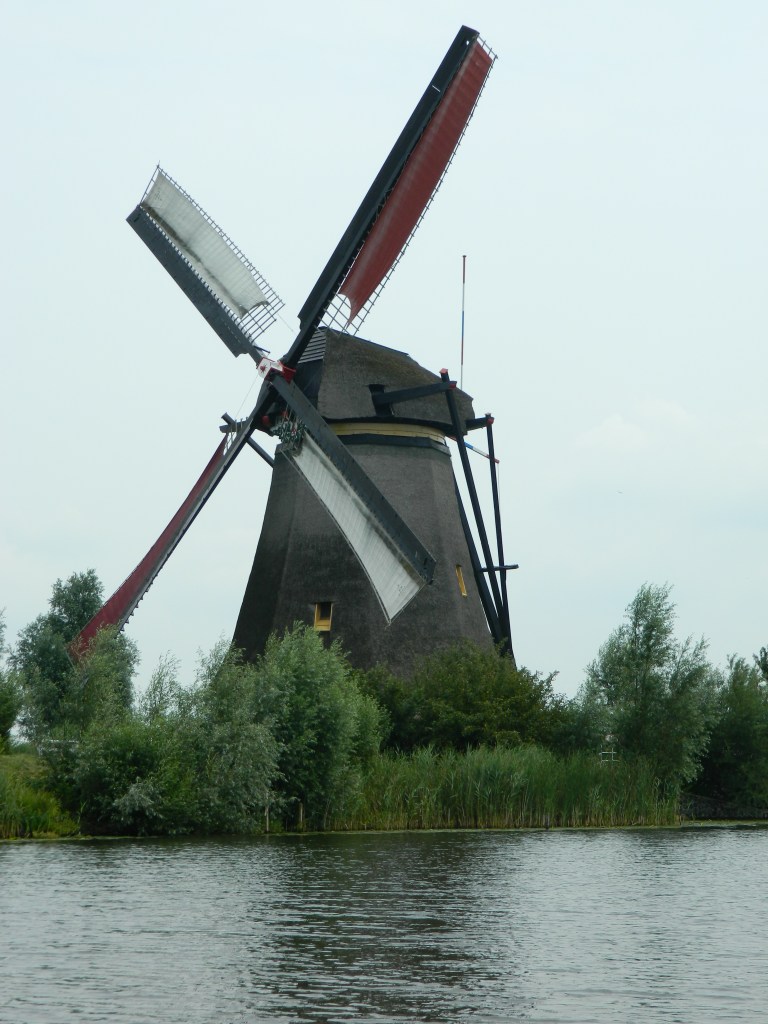
In 2016, my wife and I were on a short trip to Amsterdam, Utrecht and the adjoining areas. The objectives were to meet an old pal and his family, also, some sightseeing. I had read about Netherlands being a leader in flood control, hence, Kinderdijk was included in the itinerary. When we think of windmills, we visualize 9-10-storey high giants generating electricity but here, we have something different in the store.
Prelude
- A large area of Netherlands is below the sea level and they risk getting submerged unless scientific and engineering solutions are employed to thwart flooding and to drain excess water.
- Flood plains(a type of polder or an area that is below water/sea level) are areas adjacent to a stream or river/rivers which stretch from the banks of its channel to the base of the enclosing valley walls, and which experiences flooding during periods of high discharge.
- In such polders, humans have been living since the Middle Ages and their primary challenge was to keep the cultivation and settlement areas from flooding.
The Kinderdijk example
The village of Kinderdijk lies in one such polder(the Alblasserwaard polder) between the Lek and Noord rivers. In the 12th/13th century, the residents, especially, the farmers faced a formidable challenge of keeping their farms and settlement areas from flooding(either due to rains or natural rise in the water level due to sand deposits). Take a look at Kinderdijk’s location to get an idea of the flooding it might have suffered in the Middle Ages.
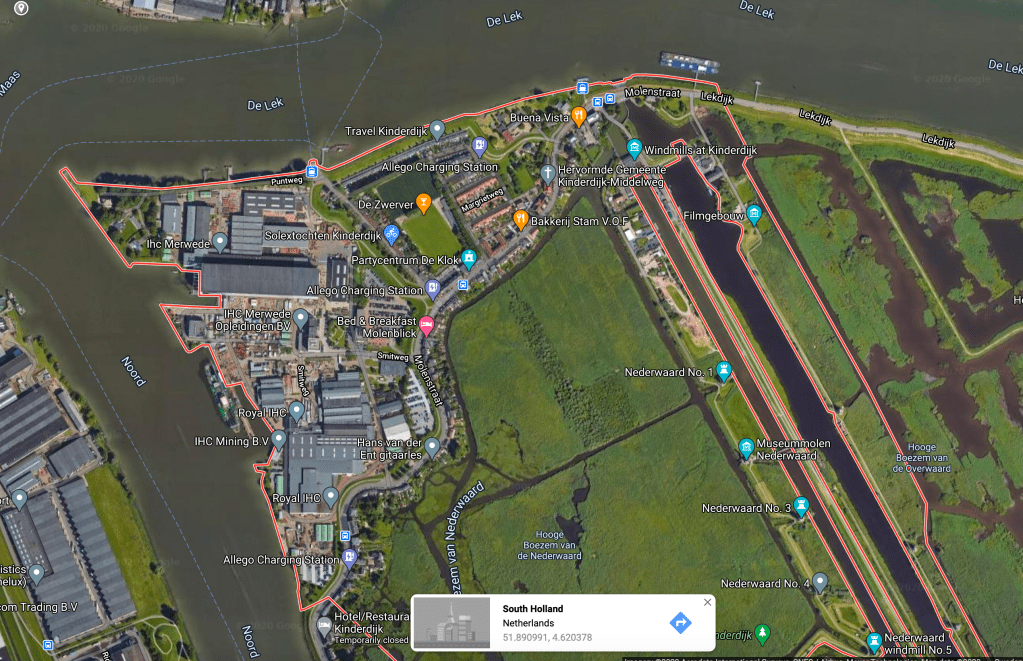
The famous windmills of Kinderdijk
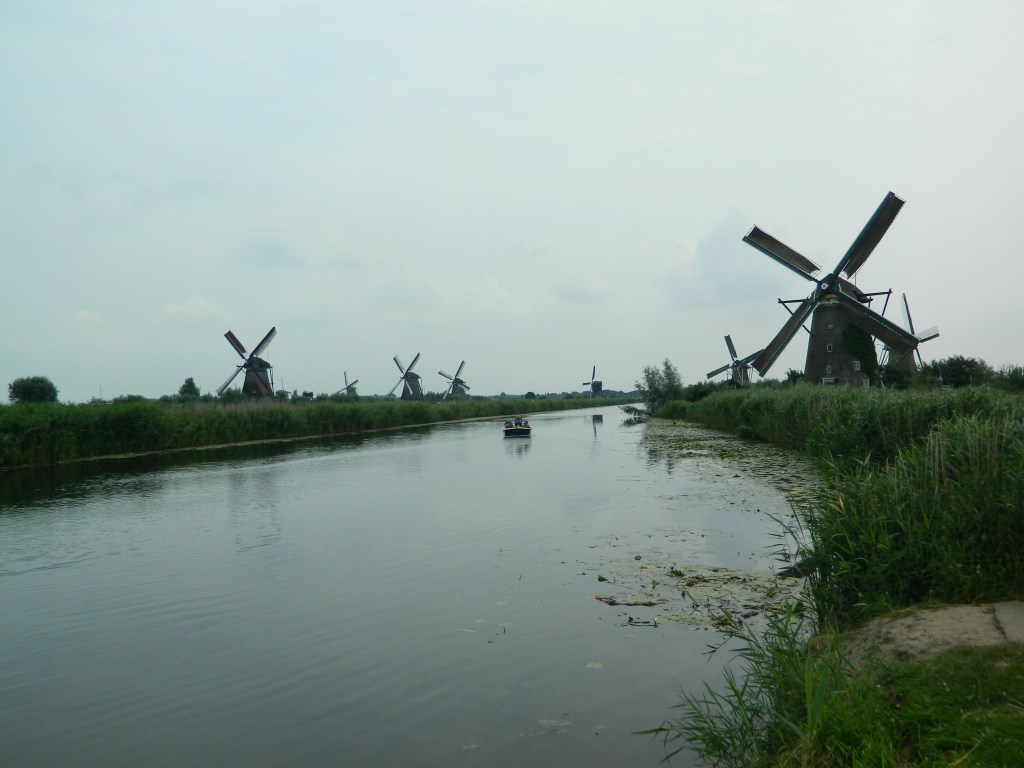
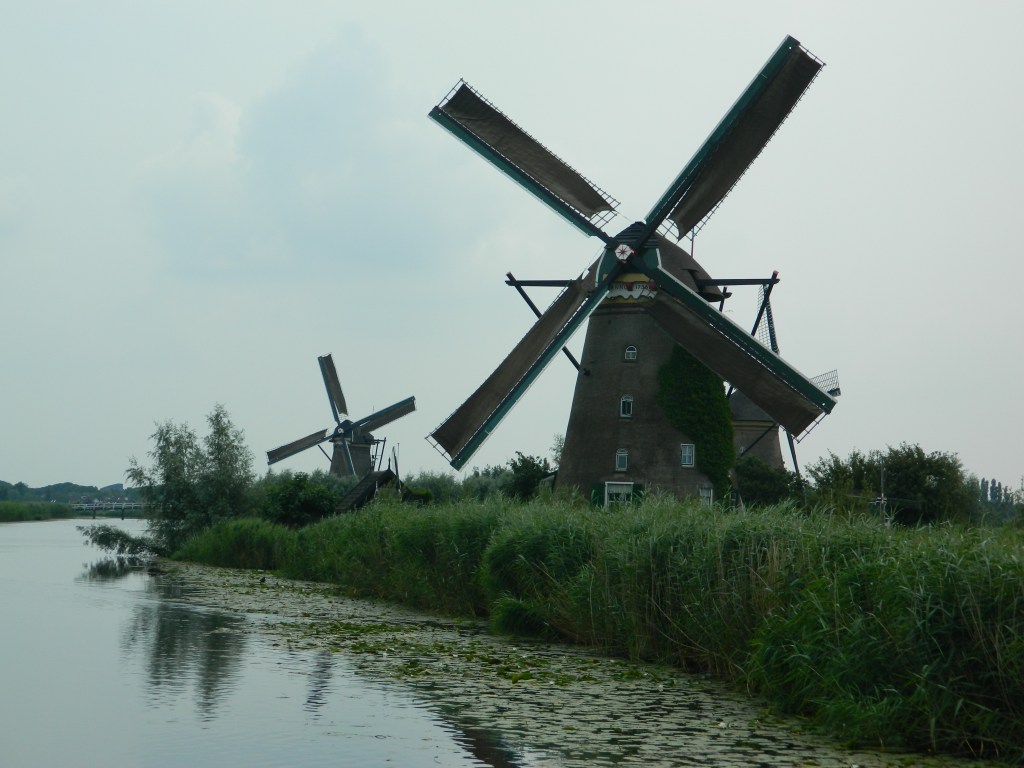
Before I attempt to elaborate on the windmills, let us first have a look(a slideshow of images, taken in a cloudy weather) at these windmills. These have been a UNESCO World Heritage Site, since 1997.
Some of these are built in bricks, others in wood. Their maximum span is 30 meters. These were operated by human beings. Families(having 10-15 members) stayed in this 2-3-storeyed windmills and even today, some of the windmills are inhabited by the descendants of such families.
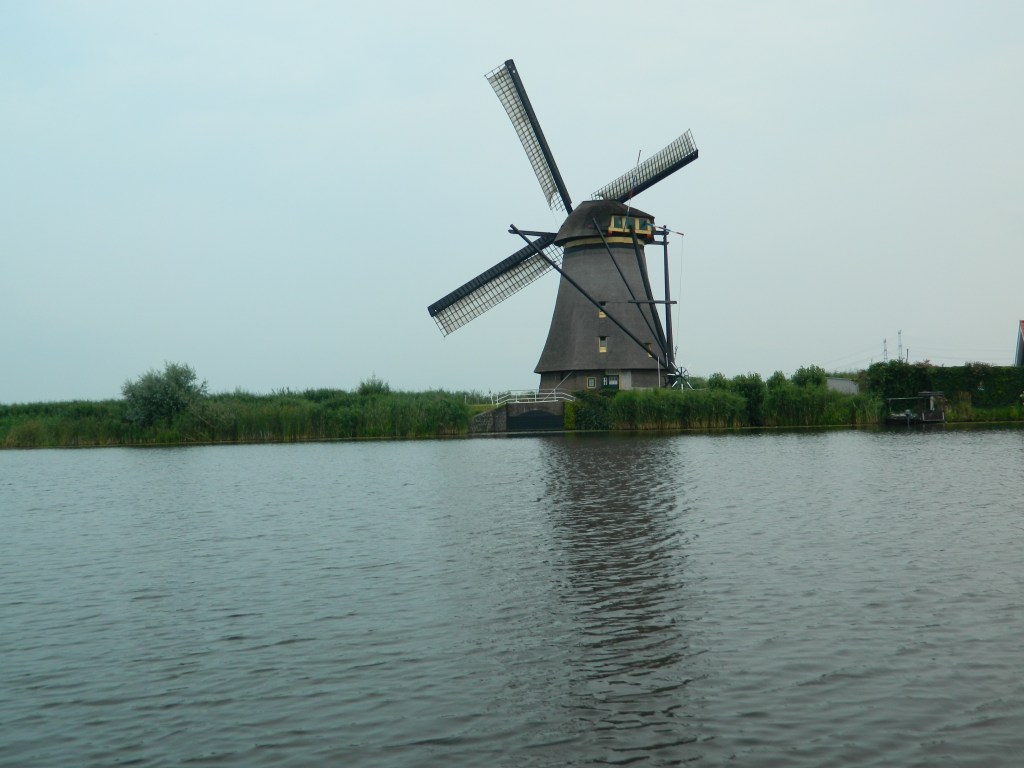
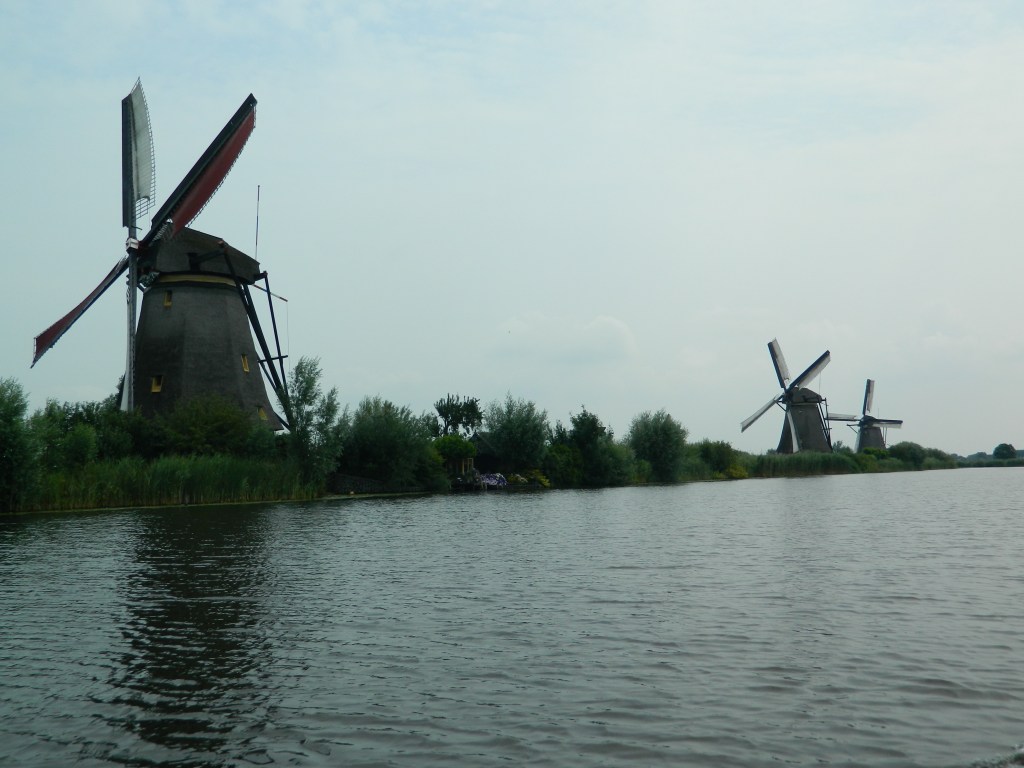

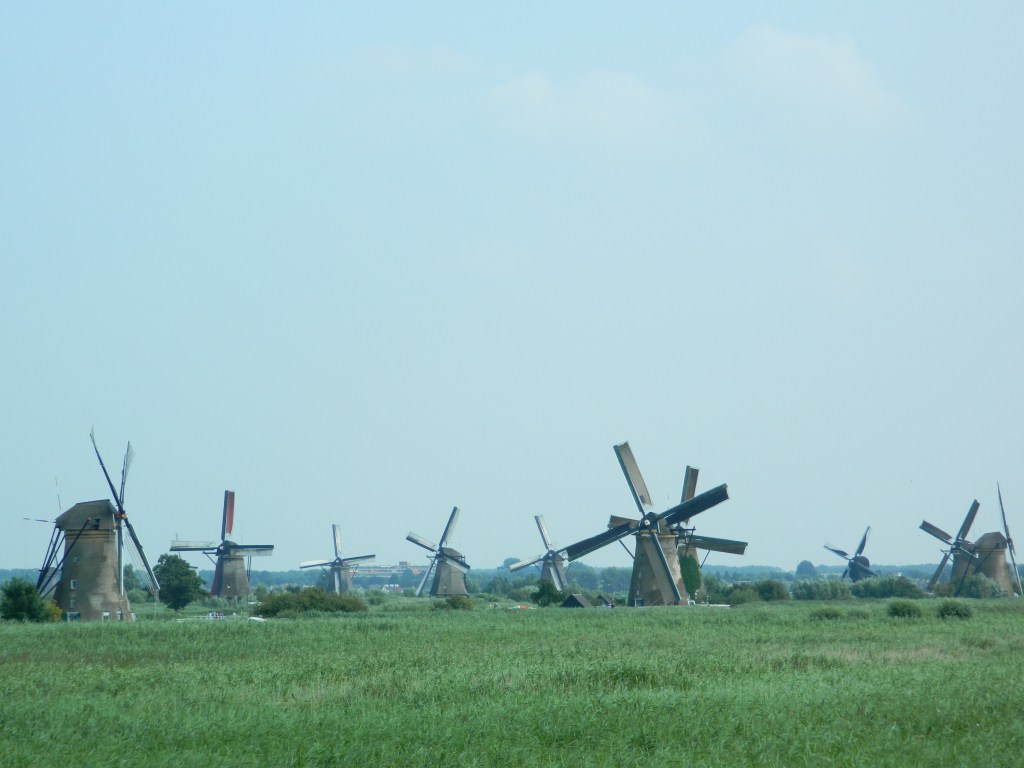
Windmills: How did they help drain water?
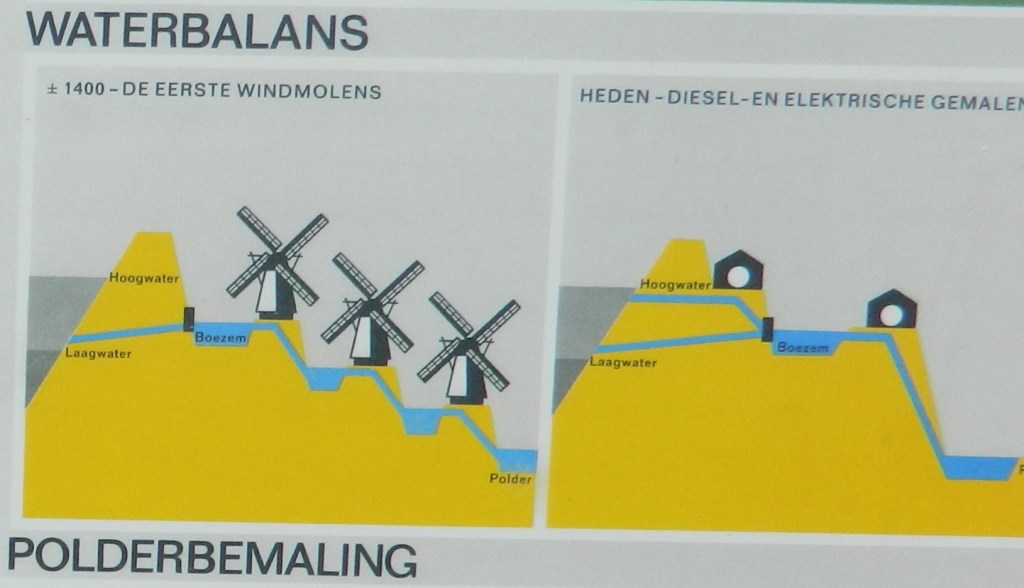
The series of windmills acted like pumps – pull water from a low-lying area and push/drain it further to a higher area and finally, back to the river/water source. Since there was no electricity or hydrocarbon fuels back then, wind was used to power these pumps.
Let us refer to a diagram(Internet source: ‘Dutch Windmills’ by Frederick Stokhuyzen). So, the ‘water intake’ was the excess water which was pulled by the ‘scoop wheel'(powered by the wind) and passed via a channel further upstream where the next windmill repeated this task.
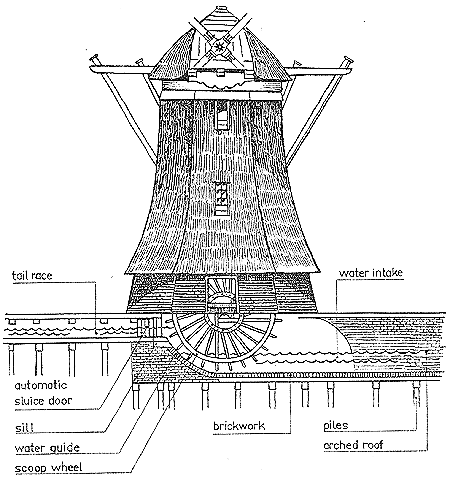
As the winds turned their direction, the people staying in the windmills used to align the direction of the fan blades so that the spinning continues to power the mill.
The below photo demonstrates how such series of windmills achieved the final objective. Note the polder being at a much lower level than the source of the water.
The social and political history associated with these windmills is equally interesting but it is out of the scope of this post, rather, my own area of interest. Personally, I am huge fan of the standardization attempts that the Europeans did and continue to do so, be it armaments, furniture, vehicles civic infrastructure and so on. The roots of such windmill series can be found in the water boards formed to make unified and standard efforts to stop flooding.
Suggestions for the future visitors
- Keep an entire day at hand to understand the mechanism of windmills, the life of the people who lived there and operated those mills.
- They have guided tours(we missed those, partly due to lack of awareness, rest, the time constraints)
- Try to capture videos(wherever allowed) of the actual windmill site information and functioning.
Epilogue
As the technological advancements continued, the windmills were powered by steam, followed by hydrocarbon fuels.
I wonder if such solutions might make a comeback in the future when the world is not only out of non-renewable fuels but also so polluted by modern energy sources, that the ancient, clean and sustainable methods would be the way out …
 Life is about being kinetic