
Preface
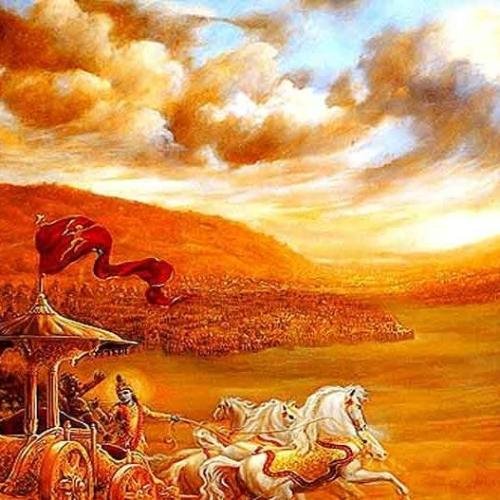
How a human leads, and behaves in, his/her daily life makes a impact on the planet. I have always been curious about lifestyles, beliefs of the society during the eras when events like Ramayan, Mahabharat occurred.
In this article, I have tried to list some events that shed some light on the then lifestyle, beliefs, rituals, behavioural traits.
Lifestyle
- Ordinary human beings were expected to stop working, and be indoors before twilight. During twilight, and later, was the prime time of Yaksh(Hindi: यक्ष), Rakshasas(Hindi: राक्षस). These races would capture the ordinary human beings roaming out during these hours.
- King Yayati(Hindi: ययाति) summarized the directives for lifestyle at various age spans of life:
- Brahmachari(Hindi: ब्रह्मचारी), specifically, a student staying in a Gurukul(Hindi: गुरुकुल):
- Apart from his studies and routine, be at the service of his teacher(s).
- Go to bed after the teacher sleeps, and rise prior to the teacher.
- Be polite, in control of his/her senses, brave, alert, and self-motivated about gaining knowledge.
- Grihastha(Hindi: गृहस्त)
- Earn wealth/money by lawful, righteous means.
- Be charitable(Hindi: दान).
- Be hospitable to the guests.
- Never take anything from anyone unless offered.
- Muni (Hindi: मुनि)
- Reside in forests.
- Regulate diet and activities that give pleasure (recreation, sex, etc.).
- Fend for self. In other words, don’t depend on others.
- Be charitable(Hindi: दान).
- Do not hurt or inflict pain on anyone.
- Munis were also distinguished based on their lifestyle:
- The ones who reside in forests, do not use any items sold/available in the nearby villages,
- The ones who reside in villages, refrain from speaking/control speech(Hindi: मौन), wear loincloth, apart from that, possesses only something like a blanket/covering, eats only enough to survive.
- Sanyasi(Hindi: संन्यास)
- Do not earn by practising crafts/trade.
- Be calm, and (psyche)strong.
- Gain absolute control of senses.
- Live aloof.
- Do not stay or even sleepover at any family’s residence.
- Do not hoard or carry possessions. Travel light.
- Walk slowly, and only a little on a daily basis.
- Travel, go places but alone.
- In spite of a wandering lifestyle, have clean teeth, nails, have hair cut, bath regularly.
- Surrogacy, fostering and adoption was practised, at least in the royal families:
- Pritha, daughter of Shurasena, was adopted by her childless uncle, Kuntibhoja and was renamed as ‘Kunti’(Hindi: कुन्ती).
- Pandu asked Kunti to bear sons by utilizing the boon the latter got from Durvasa(Hindi: दुर्वास). Note that after giving birth to 3 sons, Kunti declined Pandu’s request for more sons. As per her, the Shastras(Hindi: शास्त्र) termed a woman bearing 4 children in such a manner is considered wanton, and one bearing 5 is unchaste, adulterous.
- The Rishis-Munis(Hindi: ऋषि – मुनि) (residing on शतशृंग mountain) acted as foster parents to the Pandavas, protected and nurtured them. Soon, all the Pandavas mastered the Dhanurved(Hindi: धनुर्वेद) under the tutelage of King Shuka who was an ace warrior, and had won aplenty kingdoms in war. He was son of King Prishata. Note that nowhere it is mentioned that he was related to Drupad, the father-in-law of the Pandavas.
Note that after Pandu’s death, these Rishis not only escorted Kunti and the Pandavas to Hastinapur but also publicly narrated the biological origins of the Pandavas.
- Brahmachari(Hindi: ब्रह्मचारी), specifically, a student staying in a Gurukul(Hindi: गुरुकुल):
- A widow lives like a Brahmacharini – quits eating pickles, papad(Hindi: पापड़), and similar salty and oily eatables, eats only once a day, destroys her libido.
- Vanvaas(Hindi: वनवास) didn’t imply an absolute social isolation. The ones practising vanvaas had to live/stay in the forests but could have regular visitors and even co-habitants.
- To achieve a complete control over bodily senses and desires, individuals would reside in forests. They would subsist on edible roots, berries, and other available fruits.
- Husband and wife, would copulate only during a specific span(Hindi: ऋतुकाल), per month. Based on what I have read about it from other sources, this span was around 10-12 days, and started after the wife’s menstruation for that month ceased.
- Men indulging in excessive sexual activity contracted राजयक्ष्म:
- Vichitravirya(Hindi: विचित्रवीर्य) indulged in an unrestrained sexual activity with his two wives, for seven years straight. This weakened his body and he ultimately succumbed to राजयक्ष्म.
- King व्युषिताश्व was sexually obsessed with his wife, and he ultimately succumbed to राजयक्ष्म.
- During (after the annihilation of the Kshatriyas(Hindi: क्षत्रिय), and gradual emergence of the new race of Kshatriyas) the era of Parshuram(Hindi: परशुराम):
- Owing to the adherence to the guidelines set by Dharma(Hindi: धर्म):
- Masses lived long, healthy and prosperous lives.
- People discharged their duties wholeheartedly, which freed them from apprehensions, guilt, and other causes of mental stress.
- There were no deaths among infants and kids.
- Till reaching youth(age unspecified), no male indulged in physical relationship with a female.
- Bulls were not exploited for farming purposes, they were utilized at all as beasts of burden. Sick and old animals were fed, and looked after, till their death.
- Till the calves didn’t learn to graze i.e. were entirely dependent on their mother’s milk, the cows were not milked.
- Cows and women would bear the young ones on right/appropriate(not elaborated) time.
- Trees bore flowers and fruits as per a definite, predictable cycle.
- Businessmen didn’t con their customers by using inappropriate weights and measures.
- Owing to the adherence to the guidelines set by Dharma(Hindi: धर्म):
- During king Dushyant(Hindi: दुष्यन्त)reign:
- Marriages didn’t violate guidelines(mentioned in the epic as वर्णसंकर) set for progeny. Epic quotes:
कोई मनुष्य वर्णसंकर संतान उत्पन्न नहीं करता था| - Farmlands were fertile and the supply overwhelmed the demand. The quality of food-grains was excellent.
- People adhered to Dharma. Starvation was an unknown/unheard event.
- Diseases and infections were absent.
- Thieves and robbers didn’t exist, and in general, the masses lived safe and happy lives.
- Rainfalls were not only timely but also in right quantity.
- Marriages didn’t violate guidelines(mentioned in the epic as वर्णसंकर) set for progeny. Epic quotes:
- During king Shantanu’s(Hindi: शंतनु) reign, pigs, animals(details not mentioned), birds(details not mentioned), and मृग(deer? antelopes?) were not killed.
- During Bhishma’s(Hindi: भीष्म) regency(after the birth of Dhritarashtra(Hindi: धृतराष्ट्र), Pandu(Hindi: पाण्डु) and Vidur(Hindi: विदुर)), the state of the Kaurav(Hindi: कौरव) kingdom is mentioned as follows:
- The overall crop yield increased manifold, also, the quality was enhanced.
- Rainfall was timely.
- Trees were full of aromatic flowers and juicy fruits.
- Beasts of burden like elephants, horses, etc. were sturdy and well-fed.
- Birds and मृग(deer? antelopes?) lived happily.
- All the cities, towns brimmed with apt artisans and vocational workers.
- Saints, brave soldiers and intellectuals were happy.
- There were no bandits/robbers.
- The masses:
- Adhered to Dharma.
- Tried to keep each other happy.
- Performed rituals.
- Were devoid of vanity, anger, greed.
- Indulged in recreational activities in rivers, woods, wells, lakes, mountain peaks, forests.
- Were not misers.
- Widows were unseen(I have translated this literally, the original quote is और न विधवा स्त्रियाँ देखी जाती थीं).
- Festivals/celebrations/public recreational events, etc.(Hindi: उत्सव) were held regularly.
- After consulting his ministers, Bhishma decided to marry Pandu to Madra(Hindi: मद्र) kingdom’s princess, Madri(Hindi: माद्री). The ruler of Madra, king Shalya(Hindi: शल्य) mentioned the kingdom’s tradition of receiving levying some charges on the kingdom that expected to marry the Madra princesses. Then, Bhishma gifted thousands of gold jewels, precious stones, elephants, horses, etc. to Shalya, the latter was impressed and accepted the marriage proposal.
- After his expedition(to conquer world), Pandu developed a liking of staying in forests. For most of the time, he lived in the forests, along with his wives.
- After having 100 sons, Gandhari wished for a daughter, so that the Dhritarashtra(and his ancestors) get the Punya(Hindi: पुण्य) gained by rituals performed by Dauhitra(Hindi: दौहित्र).
- Dushyant married Shakuntala at Rishi Kanva‘s(Hindi: कण्व) ashram, stayed there for a couple of days and returned to his kingdom. While leaving, he promised to come back with a procession and royally escort Shakuntala to his kingdom. When Shakuntala(Hindi: शकुन्तला)’s son(Hindi: सर्वदमन) grew up, Kanva advised his disciples and Shakuntala to go to King Dushyant’s place. He quoted the following guidelines for a wife, set by Dharma:
- Please the husband mentally, physically, verbally and by deeds.
- Stay only for a little duration with her brothers and other relatives, lest her prestige, character and her commitment to her husband and her family declines.
- Residents of a city/town/village would flock in huge numbers/congregate during unusual events:
- When hundreds of Rishi – Munis entered Hastinapur, along with the young Pandavas.
- Pandu’s funeral procession.
- Departure of Pandavas for Varnavrat.
Professions
- निषाद(Fishermen).
- There is a mention of the following human races, during king Dushyant’s reign:
- Living in deep, impenetrable forests. Their lifestyle and behaviour was similar to the beasts of the jungle e.g. eating raw flesh.
- Hunters who would roast their kills, pestle it and then eat it.
- Per se, the profession of rakshasas isn’t mentioned in detail but it seems that, at least some of them, were cannibals e.g. Hidimb(Hindi: हिडिम्ब).
- Except Brahmins, no one should ask for alms. The Brahmins should dedicate their life for gaining knowledge, and spreading it. They should survive on alms.
- A particular set of executioners(Hindi: जल्लाद) lived near the execution grounds, and would sell/give human meat.
- Mlechchha(Hindi: म्लेंच्छ) races primarily lived in the coastal areas.
Rituals
- When Uparichar Vasu was crowned as king of Chedi by Indra, the latter gave the former a bamboo stick which would protect it’s owner. After an year passed, Vasu buried it. This set a tradition, first followed by the subsequent kings, and now by the society. Indra promised to shower prosperity on the regions whose residents and kings performed the ritual wholeheartedly.
- Prominent people from all the 4 varnas(Hindi: वर्ण) were invited for Rajasuya yagya.
- Humans worshipped Vishwakarma(Hindi: विश्वकर्मा), who was the God of architecture.
- Shraadha(Hindi: श्राद्ध) performed by one’s Dauhitra, or the grandson(sons of one’s daughter) would please the souls of the ancestors.
- As per Dharma, the following 8 types of vivah(Hindi: विवाह) are defined(the epic itself doesn’t provide the definitions of these marriage types as they out of scope):
- ब्राह्म
- दैव
- आर्ष
- प्राजापत्य
- आसुर
- गान्धर्व
- राक्षस
- पैशाच
- Vyas laid a precondition for ‘Niyog‘(Hindi: नियोग) – Ambika and Ambalika would have to observe strict adherence to the routine(Hindi: व्रत) prescribed by Vyas, for a year. The objective was to teach them to be in control of their sensual desires, which was essential for a strong progeny via ‘Niyog’.
- Rakshas satra was a Yagya performed by Rishi Parashar(Hindi: पराशर) which incinerated the Rakshasas.
Behavioural Traits
- Love & Attraction
- Aplenty incidents of women, after being attracted and/or with a definite purpose, proposing men have been mentioned in the epic. I am listing only a few, for the sake of brevity:
- Sharmishtha(Hindi: शर्मिष्ठा) proposed king Yayati so that she can conceive.
- Hidimba(Hindi: हिडिम्बा) proposed Bhimsen. She promised to protect him and his family from her brother, Hidimb. She suggested that Bhimsen and she would reside in glens in the mountain ranges.
- Aplenty incidents of women, after being attracted and/or with a definite purpose, proposing men have been mentioned in the epic. I am listing only a few, for the sake of brevity:
- Jealousy
- Duryodhan was an epitome of jealousy. It is impossible to cover the related incidents in this post.
- Once upon a time, while working in Nimisharanya, Yam(Hindi: यम) learned to perform a specific Yagya. Owing to this Yagya, he stopped his duty of taking away souls of humans. The devas(Hindi:देव) panicked and approached Brahma(Hindi: ब्रह्मा). Brahma asked them that why were they worried about the immortality of humans when they(Devas) were themselves immortal. The Devas said that they wanted to preserve their special status, and be better/placed higher than the mortal humans.
- After losing the challenge set during Draupadi’s swayamvar(Hindi: स्वयंवर), the Kshatriyas fumed at the fact that a Brahmin(Arjun in disguise) not only won the challenge but would now be married to Draupadi. They openly damned Drupad for marrying a Kshatriya woman to a Brahmin.
- Gandhari(Hindi: गांधारी) had conceived prior to Kunti but Kunti gave birth to Yudhisthir(Hindi:युधिष्ठिर) before Gandhari could deliver her baby owing to her long gestation period of 2 years. This devastated Gandhari, and she repeatedly hit her own belly in a fit of rage and desperation.
- Madri griped to Pandu about being childless while Kunti bore sons. She admitted that she is too proud to even bring this issue with Kunti, let aside asking for sharing the boon. She insisted that Pandu should ask Kunti to share the secret of the boon with her, so that even she can bear a child.
- When Madri bore two sons, Kunti was upset for because expected Madri to bear one son, but she bore two. Kunti felt that her boon was misused.
- After Pandu’s death, both his wives wished to die. Madri admitted that she would not be able to nurture and love Kunti’s sons as her own, hence, she insisted Kunti to stay alive and look after all the five boys, and she herself died.
- When the Pandavas arrived in Hastinapur for the game of dice, Dushala(Hindi: दुःशला), and the daughter-in-laws of Dhritarashtra were envious about Draupadi’s ornaments, and plush lifestyle.
- Greed, Lust
- During the departure of Pandavas from Hastinapur(for Varnavat), prestigious citizens and commoners followed them. Some fearless Brahmins openly criticized Dhritarashtra’s discrimination(owing to his greed for throne, and desire to make Duryodhan it’s successor) against the Pandavas and his ignorance of Dharma. The people questioned Bhishma’s actions of not intervening. When most of the followers continued to follow, Yudhisthir requested them to return to Hastinapur. I have added this incident(there are aplenty such incidents mentioned in the epic) to highlight the fact that people used to assemble, and express their opinions.
- A widow would often face lecherous advances from men. Widows could not remarry but widowers could. This seemed to be the practice in all races.
- When Draupadi was dragged in the court and Dushasan started disrobing her, several kings in the court not only encouraged and praised Duryodhan, but also celebrated the disrobing.
- Cruelty
- Daitya(Hindi: दैत्य) would generally commit cruel acts e.g. Sund(Hindi: सुन्द) and Upasund(Hindi: उपसुन्द) would:
- Kill Brahmins, especially teachers and the ones performing Yagya.
- Their soldiers would throw belongings of Munis in rivers or nearby water bodies.
- Demolish and destroy ashrams(Hindi: आश्रम).
- When Rishis, Munis went into hiding, they launched extensive combing operations, and killed them.
- Even animals were not spared. Everywhere, skeletons and carcasses piled up.
- Daitya(Hindi: दैत्य) would generally commit cruel acts e.g. Sund(Hindi: सुन्द) and Upasund(Hindi: उपसुन्द) would:
Junctures
- Vyas (Hindi: व्यास) foresaw/observed that with each progressing yug(Hindi: युग), the human lifespan and their physical and mental strength declined. After pondering over these events, he decided to compile, and arrange the then Vedic literature into 4 vedas(Hindi: वेद).
- Parshuram’s 21 wars against the Kshatriyas created a dearth of men of that class. To procreate, many Kshatriya women requested Brahmins who were learned, pious and had a lustrous character, to act as surrogate fathers. The progeny born such proved to be long-lived, thus, the Kshatriya classes revived.
- Daityas and asuras(Hindi: असुर) were faced a series of defeats in every war they waged against the Devas. They were banished from the swarga(Hindi:स्वर्ग), therefore, they started to incarnate as humans, mostly in royal families and also as animals like cows, donkeys, horses, buffaloes, etc. While they were fierce and brave, they brimmed with vanity and harassed Brahmins, Kshatriyas, Shudras and Vaishyas. They also started to oppress maharshis living in remote ashramas. To counter them, the devas also incarnated on earth.
- There came a time(unspecified) when humans resorted to cannibalism owing to starvation(causes not mentioned). This was the time when Adharma(Hindi: अधर्म) manifested/revealed and his progeny flourished. Their sole purpose was the destruction of living beings.
- After Pandu’s death and cremation, Vyas requested his mother, Satyavati(Hindi:सत्यवती) to retire to the forests, to save her from the pain and suffering of witnessing the horrible, impending events. He predicted:
- Abominable times lied ahead.
- Treachery would be commonplace.
- Dharma, Karma and practices of living a virtuous life would disappear.
- Duryodhan and his brothers would do injustice to the society, which would ultimately lead to demise/elimination of warriors from the face of the earth.
- The residents of Hastinapur and the Kuru empire publicly praised Yudhisthir and the Pandavas for their talents and righteousness. They claimed Yudhisthir as the prince, and successor to the Kuru throne. They also openly criticized Dhritarashtra’s greed for the throne, his nepotism, and unfair treatment meted out to the Pandavas.
- Once upon a time, while working in Nimisharanya, Yam learned to perform a specific Yagya. Owing to this Yagya, he stopped his duty of taking away souls of humans. This caused a population explosion.
Disclaimer
- I am interested in factual history, rather than novels or fictional depictions of historical entities and with this hat on, I have started to read Mahabharat.
- My primary goal is to slice-and-dice the epic on several parameters – it’s characters, geographical listings, specific events e.g. boons and curses, facts lesser-known to the masses(that includes me), and so on.
- I have tried to reproduce the facts as mentioned in the original epic, in other words, AS-IS. I have also tried my best to avoid expressing my own guesswork & opinions but wherever I couldn’t avoid, I have marked the text in grey.
- Related to point 3. – I have refrained from commenting/skipping/justifying/opposing facts that seem unrealistic, unscientific, improbable, etc.
- Errors in translation, interpretation of metaphors, geographical entities might have crept in. Constructive corrections are welcome.
- The posts should be read and interpreted with the above points in mind, otherwise, I have no intentions and capabilities to evaluate or criticize a timeless legend like Mahabharat and it’s characters.
- As an epic, I doubt there would be any Indian who is unaware of Mahabharat and I belong to that humongous population. My intention was/is to gain, at least a brief, understanding of the political and social events during that era. I wish to learn about the simultaneous and sequential events that occurred in the then known geographical areas.
- I am completely aware of the rule of reading History – one should not judge the past based on the present standards, paradigms and situations.
- I dislike the English language’s norm of appending ‘a’ to Indian epic names(Rama, Ravana, Ganesha, Shiva, etc.), hence, as far as possible, I have deliberately avoided the English language interpretation of ‘schwa‘. This is not always possible though e.g: ‘Kaurav’ and ‘Pandav’ are terms that designate lineage, not a number. So, plural reference, it is necessary to use ‘Kauravas’ and ‘Pandavas’. Another deviation from English language rules is spelling words as per their phonetic sound in Hindi e.g: ‘यज्ञ’ has been written as ‘yagya’ and not ‘yajna’.
- The readers can be of diverse backgrounds, especially, in terms of their knowledge about Mahabharat. My posts are written based on my ( limited)knowledge of facts, which may differ from the readers. Constructive feedback is welcome. For discussions, please drop a personal message.
 Life is about being kinetic