

Introduction
In the 20th century iron, and steel had become the backbone of powerful nations. Northern parts of Sweden(Kiruna, Gällivare) have the largest, purest iron ore deposits in Europe. As early as 1902, Sweden begun transporting its iron ore via railway to the Narvik harbour. The port doesn’t freeze in spite of being on the Arctic coast, thanks to the Gulf Stream ocean current.
Great Britain, and Germany were in a race to claim this rich iron ore supply which resulted in the battles of Narvik. These battles started with a naval battle on April 9, 1940. In this post, we list some of the ships that participated in that naval battle.
Countries
Norway
Eidsvold & Norge
Narvik’s coastal defence consisted of only two old warships named ‘Eidsvold‘, and ‘Norge’. These were built in 1899, and were far too obsolete to fight the German destroyers in 1940. The Germans tried hard to negotiate a peaceful surrender to which the Norwegians paid no heed. As soon as Eidsvold fired shots, the Germans fired 4 torpedoes, out of which 2 hit Eidsvold, breaking it into two(sunk around 0437). It was the ship’s first, and last battle. Its sister ship, Norge, met a similar fate(sunk around 0500).
With the fall of these two ships, and absolute unpreparedness of the ground forces, Narvik fell in the hands of Germans without any resistance on the same day(April 9, 1940).
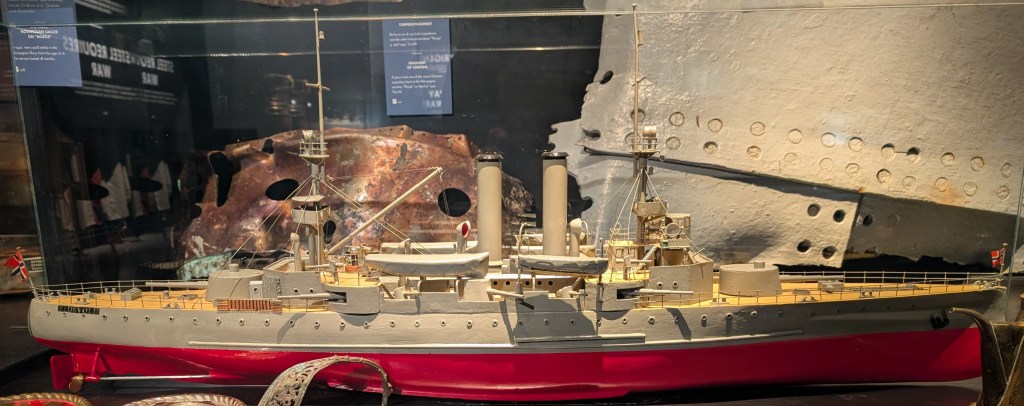
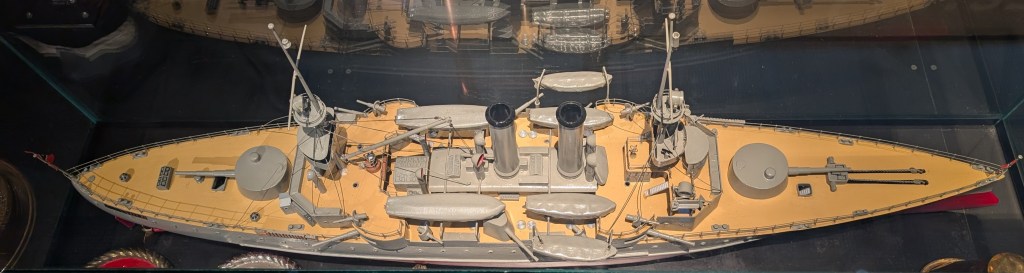
Approximate Values
- Year of manufacture: 1899
- Crew: 270
- Weight: 3645 ton
- Length: 94.6 metre
- Max speed: 17 knot
- Engine(s): 4500 hp
- Cannons
- 21 cm: 2
- 15 cm: 6
- 7.6 cm: 6
- AA guns
- 12.7 mm: 2
- 7.92 mm: 2
- Torpedo launch tubes
- 2
Germany
‘Wilhelm Heidkamp‘, and others
The German naval(Kriegsmarine) fleet consisted of 10 destroyers of Z-1934 and Z-1936 classes. The Z stands for the German word ‘Zerstörer'(destroyer). Two of these destroyers were ‘Wilhelm Heidkamp‘ and ‘Bernd von Armin ‘ sank Eidsvold, and Norge respectively.


Approximate values:
Z-1934 class
- Year of manufacture: 1935-1937
- Weight: 2360 ton
- Length: 119 metre
Z-1936 class
- Year of manufacture: 1936-1939
- Weight: 2450 ton
- Length: 125.1 metre
Common to both classes
- Crew: 323
- Max speed: 38 knot
- Engines: 69000 hp
- Cannons:
- 12.7 cm: 5
- 3.7 cm: 4
- AA guns:
- 20 mm: 4
- Torpedo launch tubes:
- 53.3 cm: 8
Great Britain
HMS Cossack.
Even before the Kriegsmarine destroyers entered Narvik via the Vestfjorden, the Royal Navy had started to deploy contact mines in the Norwegian waters, thus, violating Norwegian neutrality. Even if the 5 destroyers were stationed at the Vestfjorden on April 9, 1940, either due to bad weather or unknown reasons, they couldn’t detect the German destroyers.
The British attacked the Germans the next day(April 10, 1940). The battle cost both the sides dearly, including the deaths of naval commanders on both sides.
HMS Cossack was heavily damaged, and barely survived. It was temporarily repaired, and later it limped its way back to Great Britain.
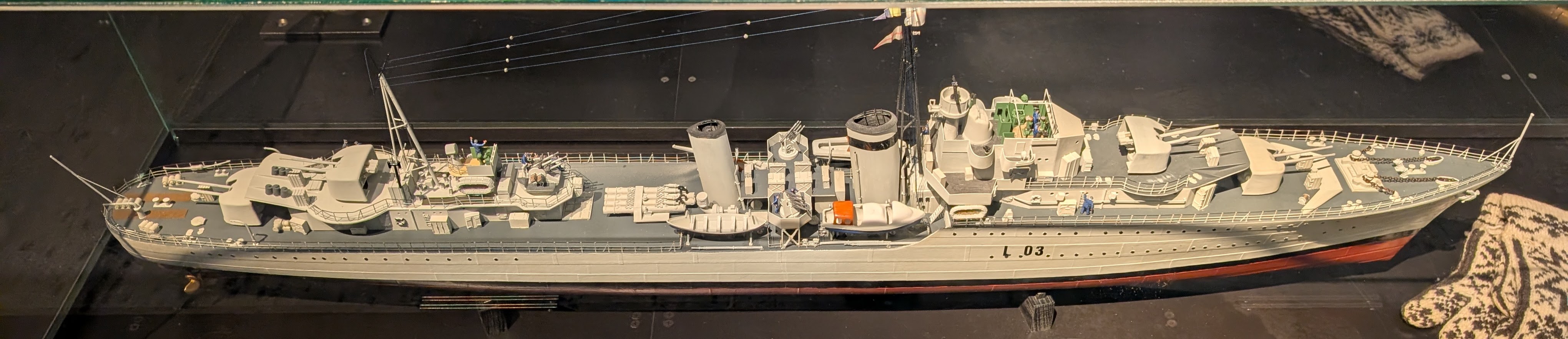

Approximate Values
- Year of manufacture: 1936-1938
- Crew: 219
- Weight: 1921 ton
- Length: 114.9 metre
- Maximum speed: 36 knot
- Engine(s): 36000 hp
- Cannons:
- 12 cm: 8
- 4 cm: 4
- AA guns:
- 12.7 mm: 2
- Torpedo launch tubes:
- 53.3 cm: 4
Demo
This video depicts the 2-day naval battle, and the aftermath.
Disclaimer
The ‘Demo’ section might contain third-party images/videos/other multimedia. The author neither claims nor intends any infringement, and tries best to give credits to the original creators/owners. The only purpose of including the third-party material is to provide the readers as much information as possible, in an intuitive manner.
 Life is about being kinetic