
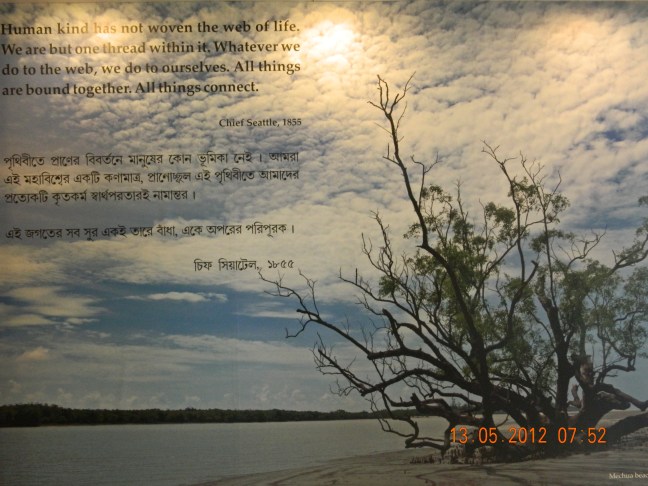
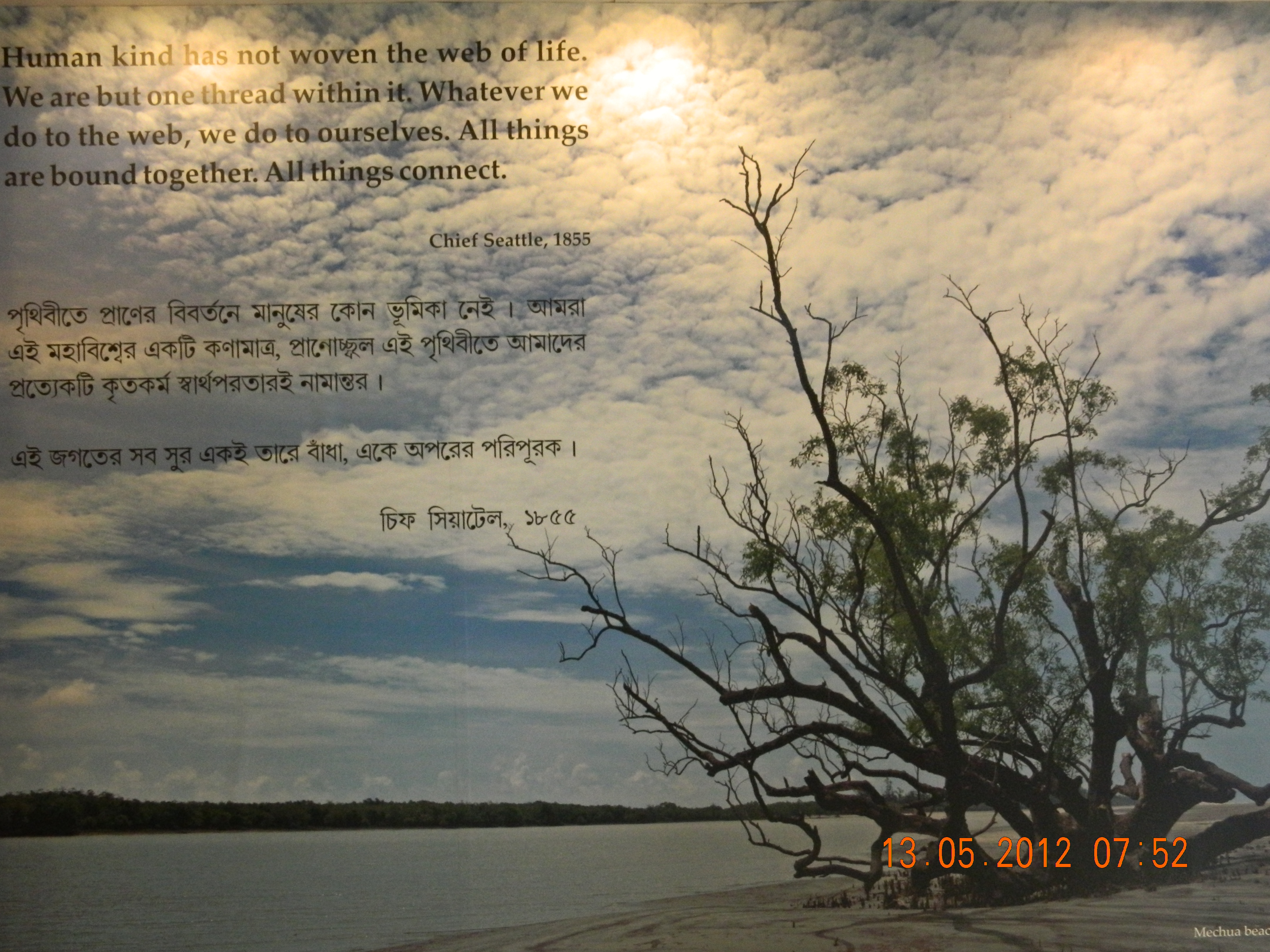
I have deliberately excluded the preface part and started directly from the beginning of our Sundarban excursion.
The Sundarban tour package was offered to us at rupees 4500 per head for 2 nights,3 days. When our plan was confirmed in the last week of April, I had transferred half of the amount to the account no. provided by Mr. Rajesh Shaw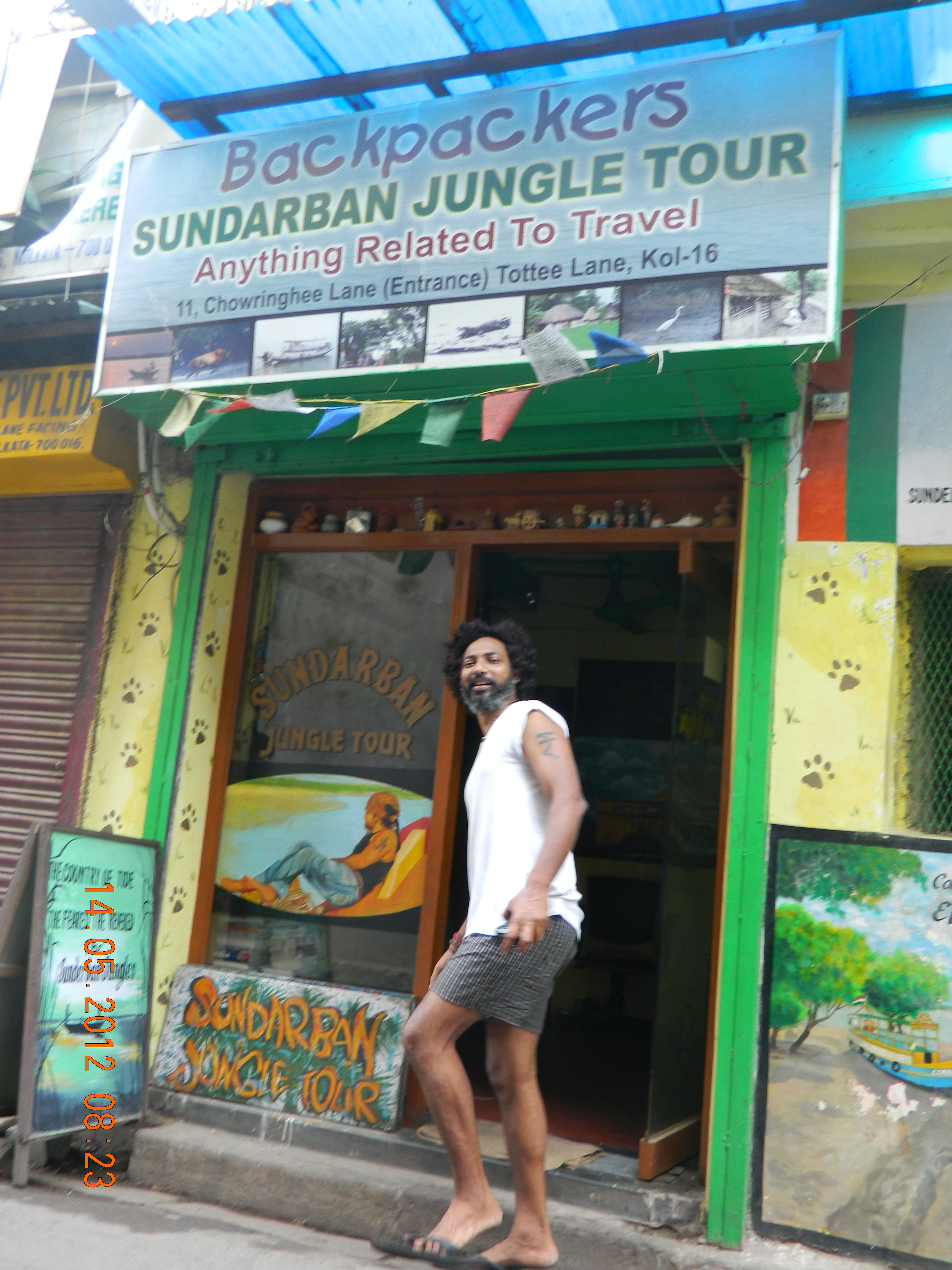 of ‘Backpackers’ via email.
May 12,2012 :
We three arrived at the ‘Backpackers’ office at Sudder Street, Kolkata around 0815 hours. We paid the other half of the package fare. Rajesh is an amicable guy, always eager to talk and listen. He said we get rupees 1500 back if we return on Sunday evening(May 20,2012). We agreed readily as it would give us an entire day to explore Kolkata and the same was going to be arranged by Backpackers Kolkata Bike Tour.
Immediately, we started for Sundarban in a Santro, driven by Mowgli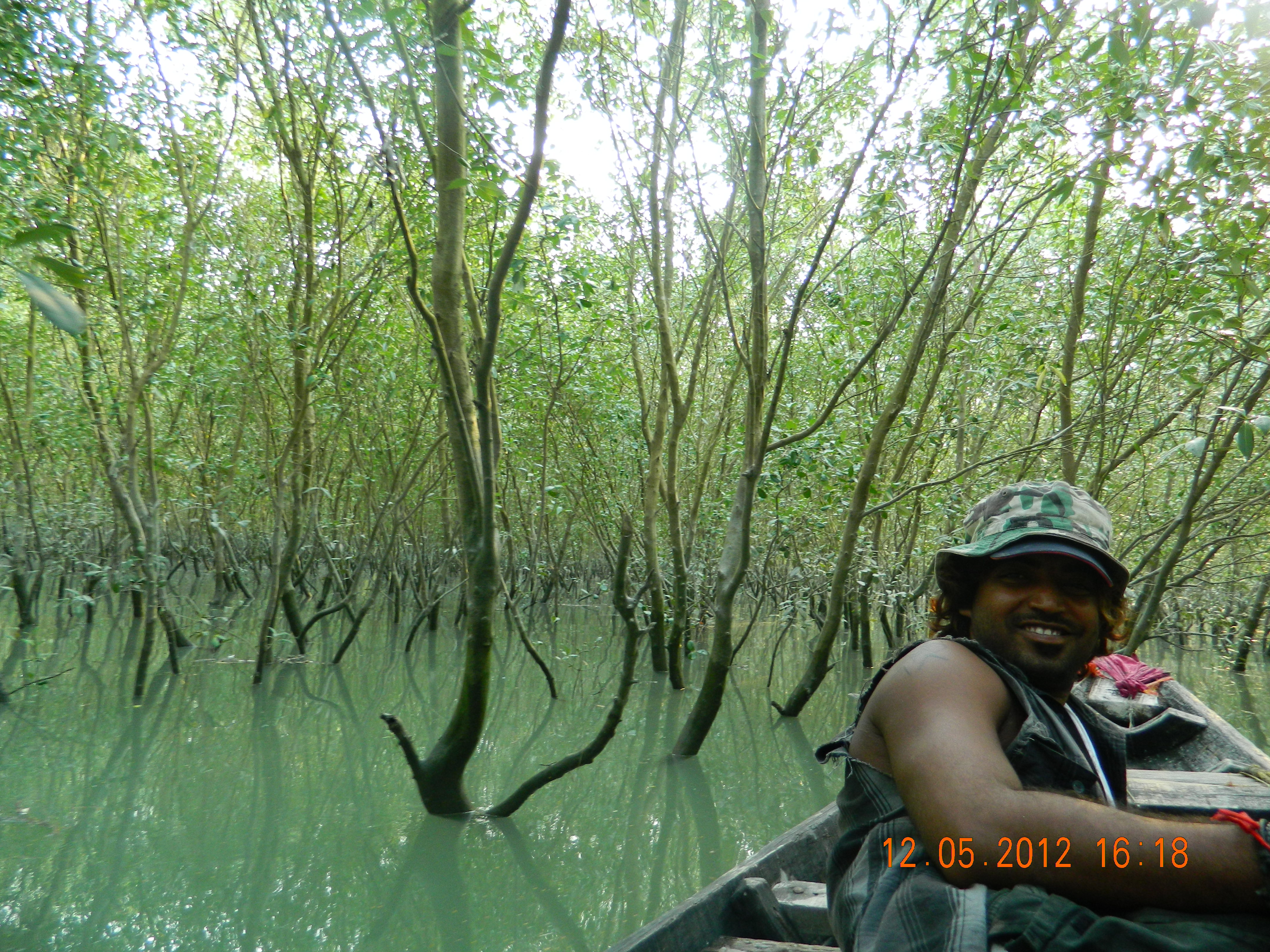 who is Rajesh’s nephew and the field-guy of Backpackers. The journey was said to be of around 100km and would take 3 hours.There were two routes – a longer but sparsely populated and having bad road conditions and a shorter having better roads but thickly populated.We took the longer one which was always Mowgli’s preference. We passed along Science Centre and after a few km, villages were visible. The weather was hot and humid, as I had heard about West Bengal and particularly about Kolkata. The road wasn’t very wide and Mowgli often used to leverage the power steering’s capabilities :P. For our breakfast, we halted at a ‘dhaba'(I dunno the Bengali name) around 30km from Sudder Street, South East. A tasty daal of some pulse I couldn’t recognize and chapaati satiated me.The water was hard and a bit acidic in taste. Soon we started off. Buses – not sure whether private or run by WB govt. Followed by shabby motorised rickshaws
 were the only visible modes of transport – people and goods till we reached Gothakali. All the way, there was a stinking, polluted backwater passage to our left which was said to carry sewage water out of Kolkata city. The only landmarks I remember are Basanti village(town?) and some bridge over Matla river. I was apprehensive as the village economy there didn’t manifest any signs of robustness – the cultivable lands surfaced only near Basanti and most of the areas on both sides of the road was filled with saline water beds – apparently used for fishing. Surprisingly, I didn’t find any salt extraction beds anywhere ! The worrisome brick-manufacturing was on it’s prowl which left me quite restless. I noticed a tree with bright orange-coloured fruits which was the ‘Khajoor‘ tree.
We reached Gothakali around 1215 hours. Mowgli supplied me with the information that the Indian side of Sundarban has over 100 islands – 54 open for human habitation and 47 reserved for wild life. From Gothakali, the prominent entry point to Sundarban, we took a boat to Gosaba island which, as per Mowgli, is biggest and most important island of the rest 53. I could notice it had a lot of constructions and also had a hospital. With over 50 people stuffed, the boat reached Gosaba side in 15 min. Then we had a walk which took us through the Gosaba bajaar, a typical village/small town bajaar which was quite crowded. We picked up some glucose powder and batteries and then set rolling on a man-driven rickshaw
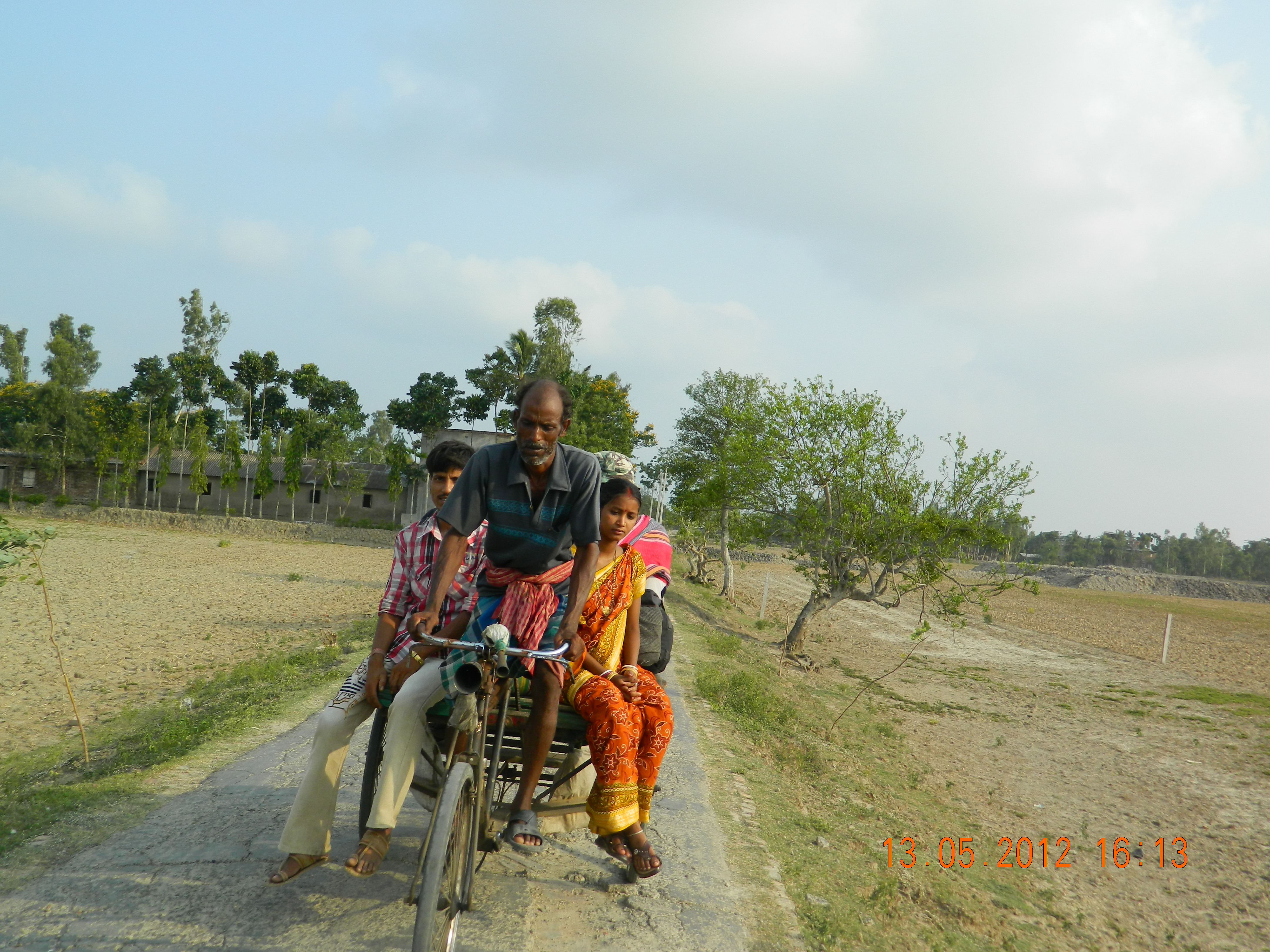 . As per Mowgli, this is the only mode of transport from Gosaba bajaar to rest of the villages is this rickshaw. Since my childhood when I heard this from my mother who often used to visit WB’s remote villages, I felt rueful for it – a man acting like a beast of burden just to meet his end needs ! All the time till I was on that rickshaw, I was restless – whenever a gradient came and the driver had to labour his way upwards, I felt bad ! Of course, at this ‘mature’ age, one can’t afford to speak about this !!! I wondered if the EMI(Electro-Magnetic Induction) could be of any help to these rickshaw drivers – charging some battery when in motion and utilising the stored charge on a gradient or at random intervals, in a controlled manner !!!
After a ride of about 4km through small villages like Rangbelia , we reached Pakherali(A distortion of Bengali word Pakheraalay; ‘Pakher(belonging to birds)-Aalay(House/Residence)’ ). Here, I first removed my shoes and socks 😀 Then we had our lunch at a family living there(Mowgli’s contact). The sharp taste of mustard oil with Karela(Bitter Gourd) was pleasing. I also saw the very same Khajoor tree in the backyard of the house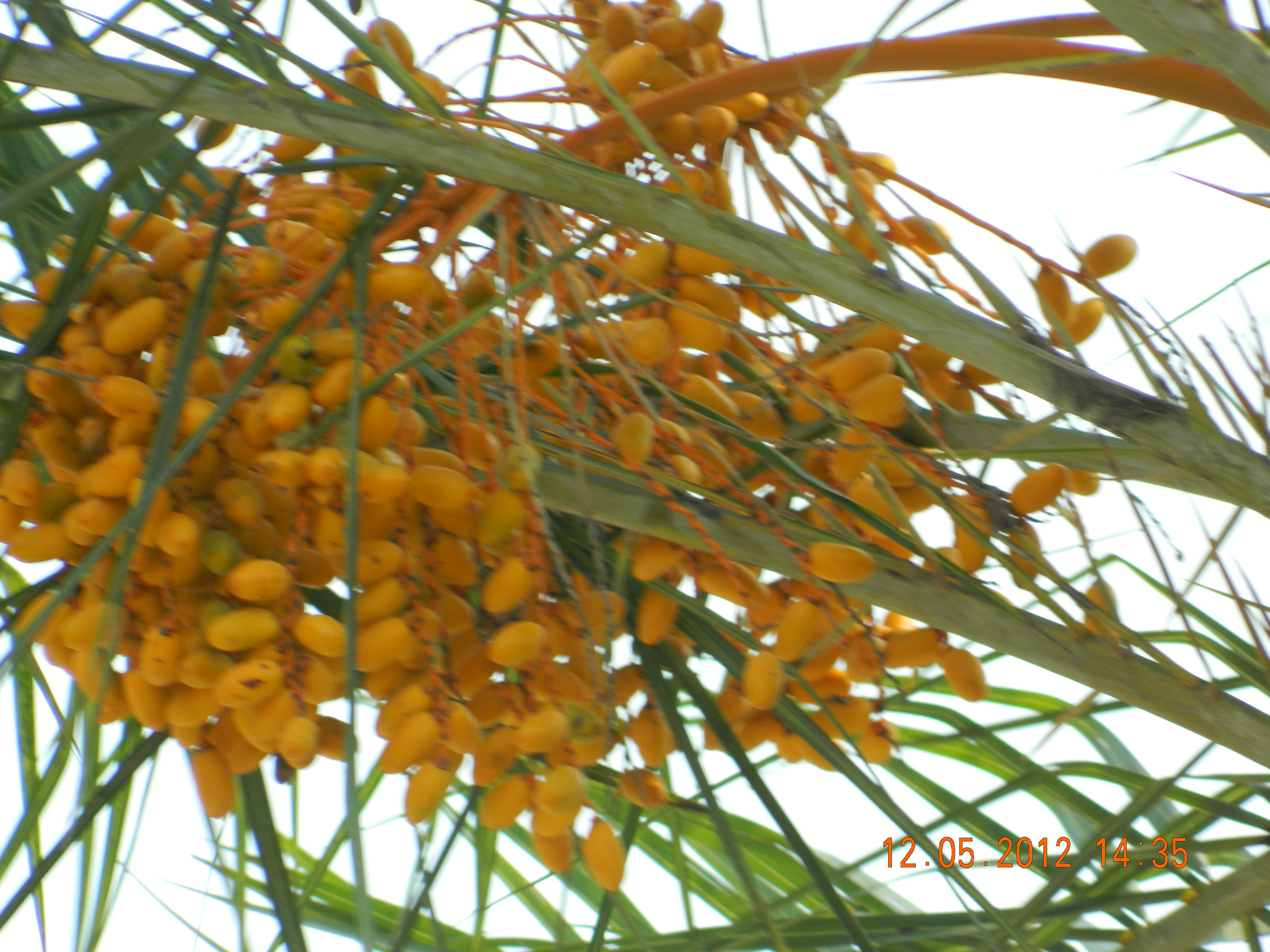 . I insisted Mowgli to enquire about it – I was desperate to drink something, if they extracted from those ripe fruits ! The man there told that in Winter, the stem develops sharper spikes from which juice is extracted and in summer, the tree develops fruits which has a thick shell and isn’t quite edible.Then we set for a small-boat ride in the Matla creek. I and Anupam had decided to go bare feet. Mowgli and I chatted a while. He told me that the there was a tiger attack on cattle in Pakherali a week back. I was constantly wondering that how the tiger swims at least 2km wide creek, hunt and swim back to his lair ! Most of the mangrove varieties visible here were longer in height
 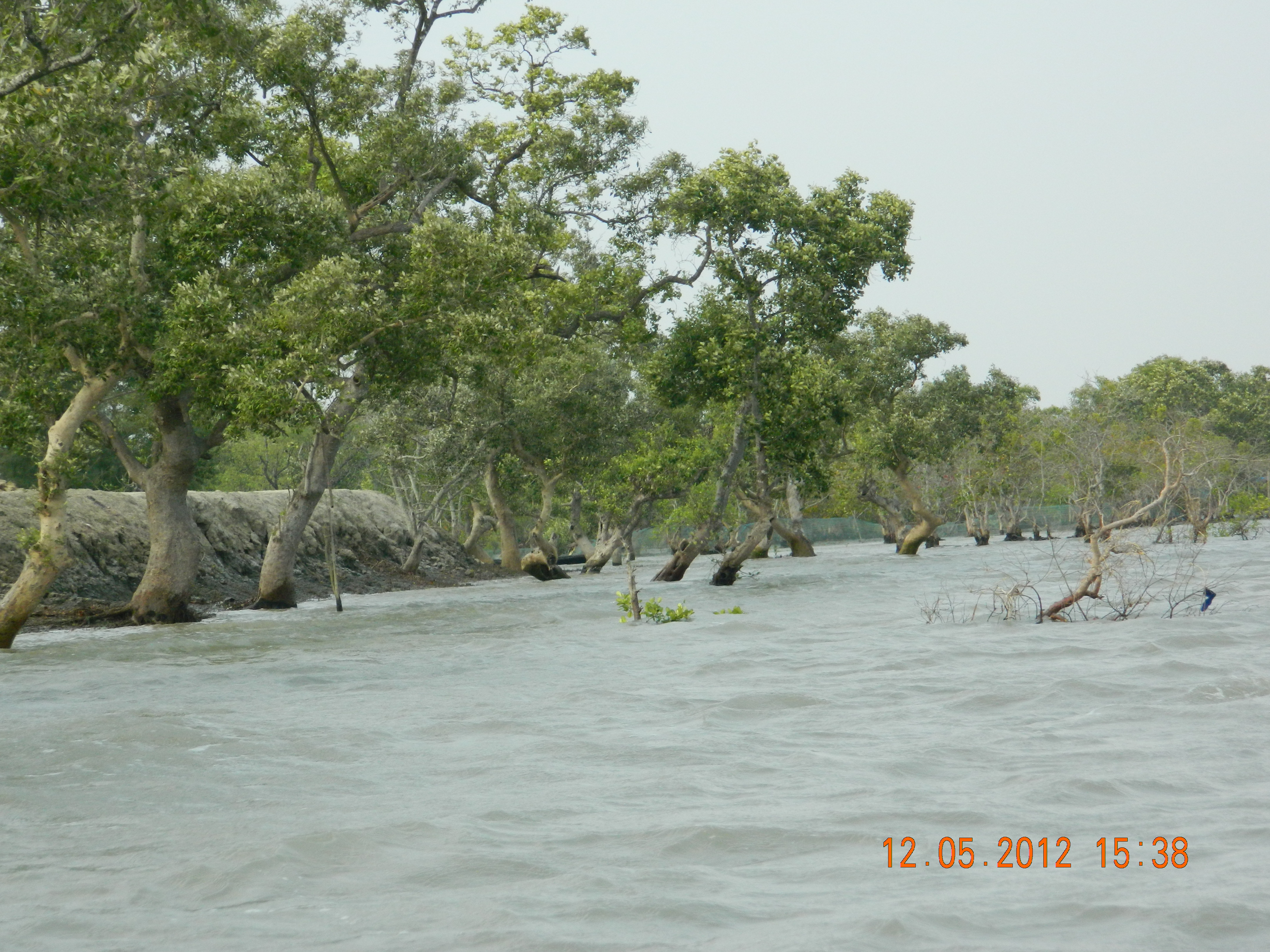 but sparse in density as compared to the mangroves of Kokan.Also the mangroves here have a diversity. In my opinion, this would be because of the low salinity of water due to regular flux of fresh water from Ganga and other Himalayan rivers.
The boat ride wasn’t a new experience for me at all so I was quite calm and unexcited but Anupam and Rakhi seemed to be enthralled. I noticed some big steamers and enquired to Mowgli about them. He told me they ply between India and Bangladesh and bear both the flags
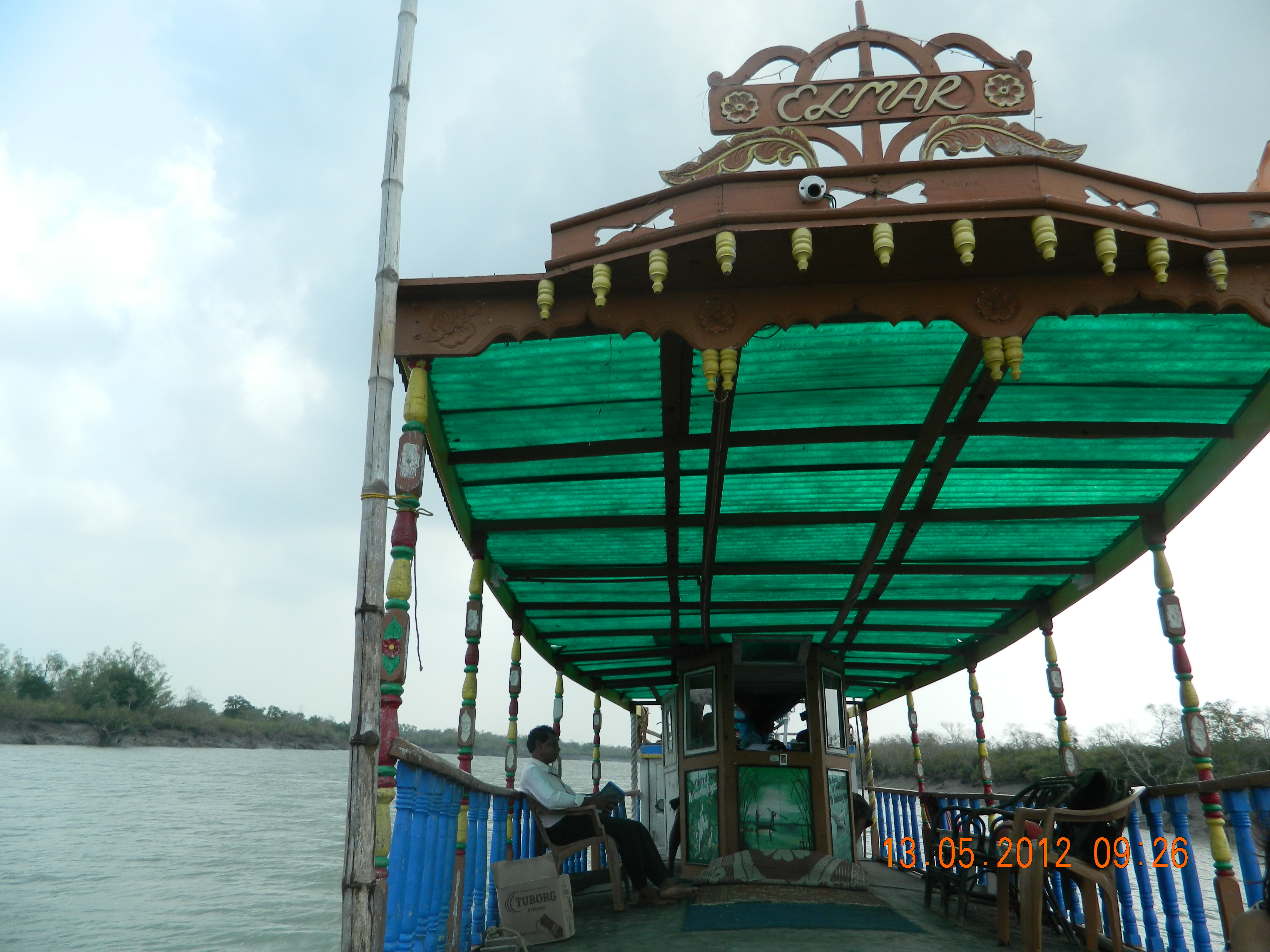
Though I have been in creeks numerous times before, I never got a chance to sail within the mangrove cover and halt there; I got it this time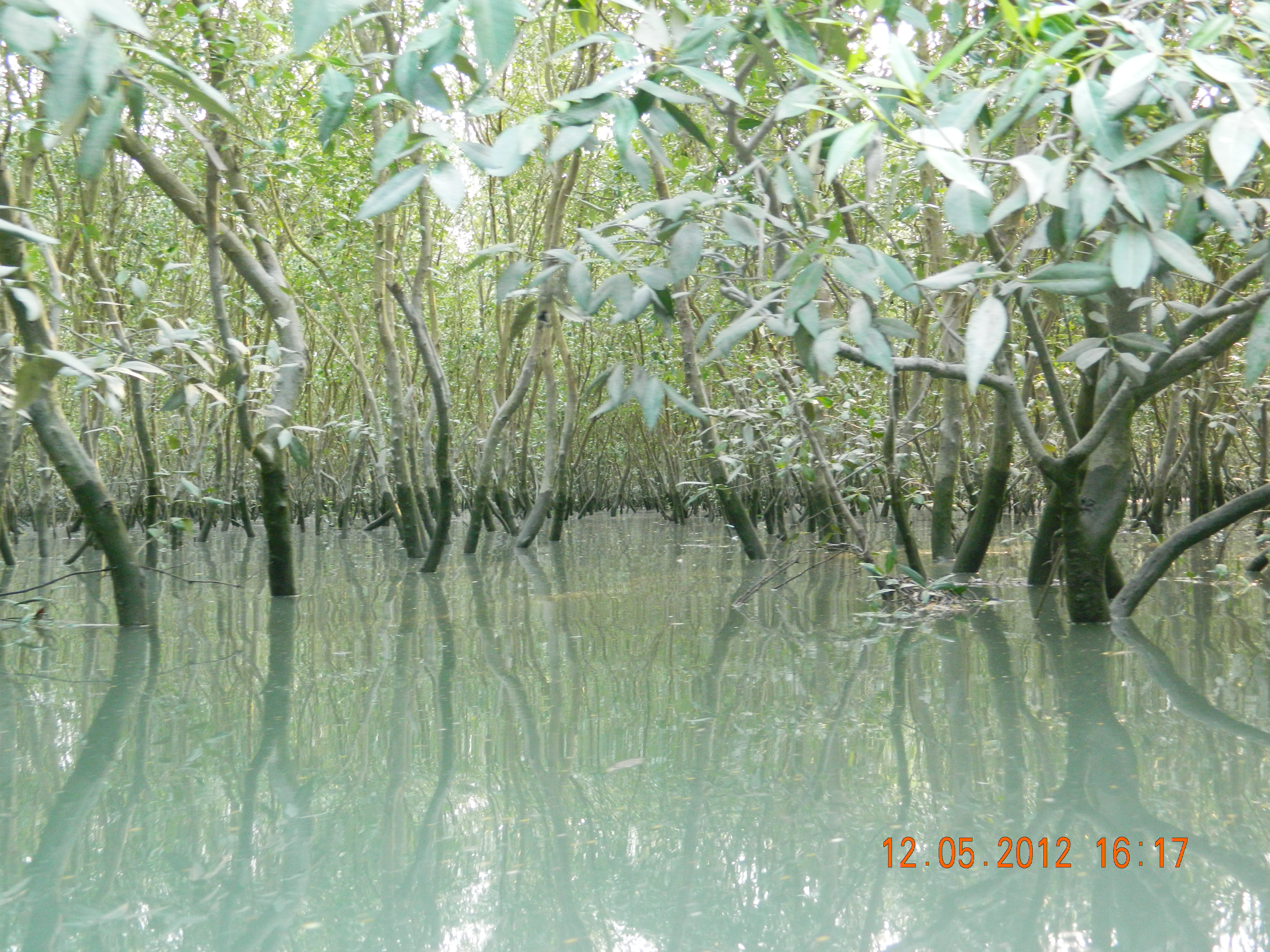 ! As with typical creeks, the water levels rise and fall here drastically during high and low tides. The time we visited was when the low tide had just begun. As I am quite naive and less interested in flora-and-fauna stuff, except for some crabs and small but rampant Mudglider(???) amphibian species, didn’t notice much. Then we headed a bit more eastward and alighted at the Dayapur island. Here, a week back or so, the Backpackers bought some land which they are planning to turn into an eco-resort. When I enquired for reasons, Mowgli said that electricity will be available in Pakherali and most of the villages within a month and then it will be soon disturbed a lot. Here, suddenly, Rakhi started feeling dizzy ! We halted for some time and then set again towards Pakherali in the same boat. I napped for some minutes on the way as our mission for the day was accomplished 😛 We had decided to stay on the boat itself, hence, Mowgli boarded us on Elmar(Spanish word for ‘Ocean’).
 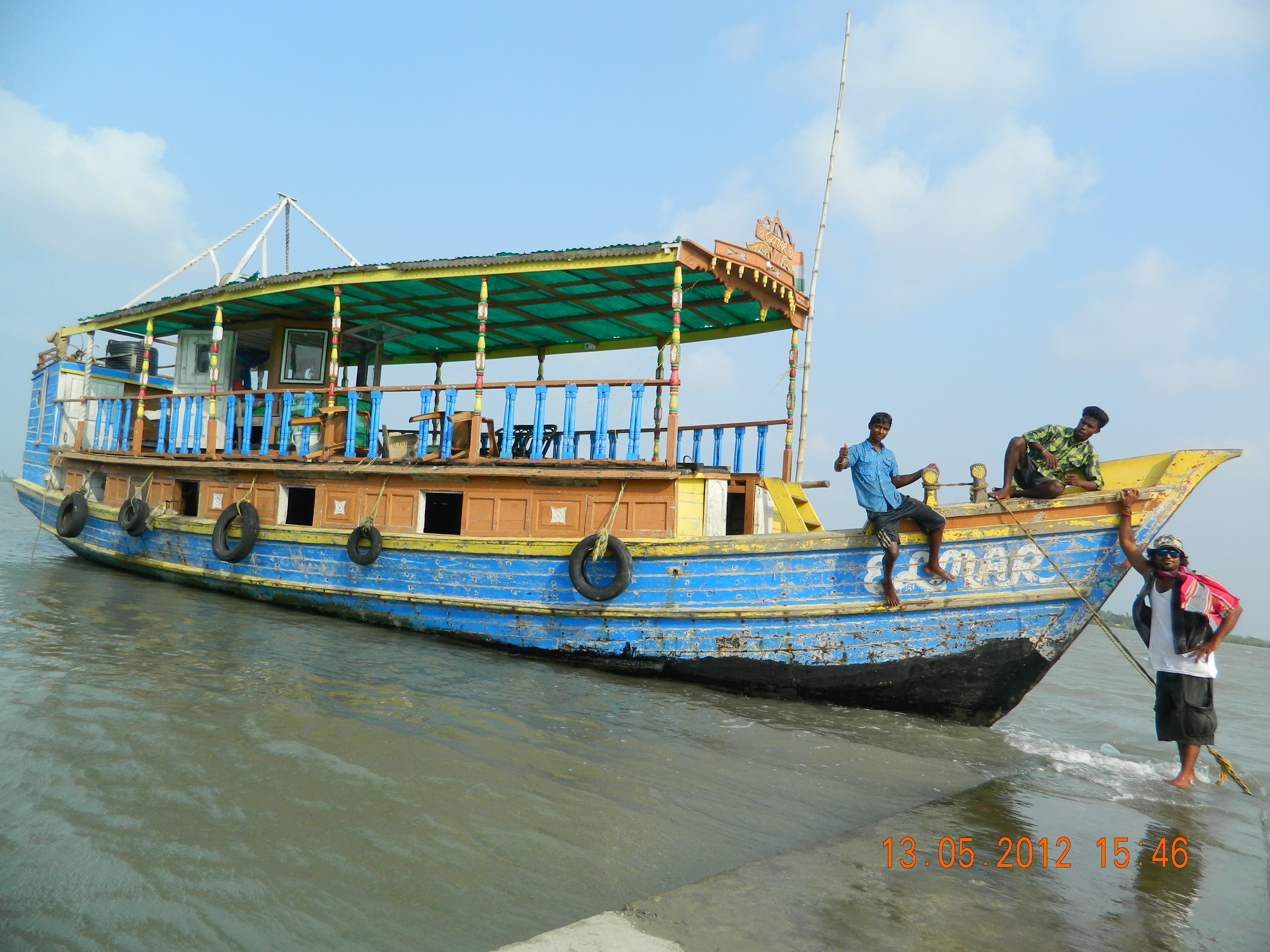 This boat, they bought some two years back for 1lakh or so and invested an equal amount to retrofit stuff necessary for making it comfortable for the tourists.While I had slept near the coast, in a windy atmosphere at night without electricity before, sleeping on a boat’s deck was a new experience. I had a quick shower and then we all rested on the deck. Mowgli had arranged for some local musicians who enthusiastically played some songs in the local dialect
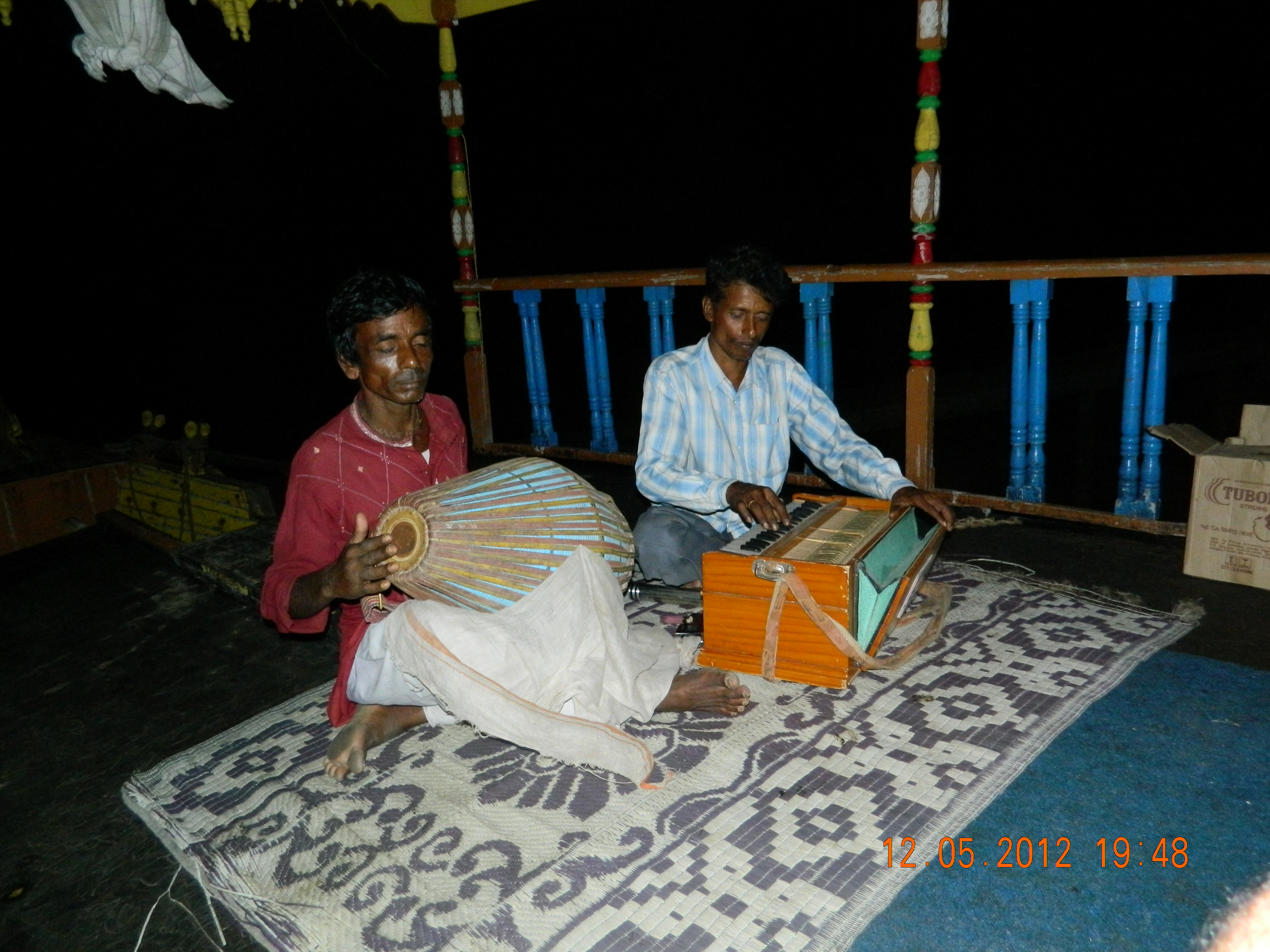 . I understood and liked the first song – the beginning was like Aandhariniyon paar karibiyo(See me through/salvage this darkness). It appeared like a rueful prayer and it indeed was one ! Second song was about Lord Krishna and Radha whose only a line or two I could figure out. Another song talked about changing times in love and relations – first, letters were used by lovers to communicate, now phones are used. First it used to take a long time for lovers to meet, know and accept each other but now it happens quite quickly. First, the relations never used to break and even if they broke, they did over a long time; today they are gone in no time ! Mowgli sent the performers and the dinner guys back hurriedly as there was some lightning and he saw possibility of rains. We soon had our dinner and dozed off ! I was awakened only twice the whole night – once when Mowgli stumbled against me and my hand instinctively went for my specks and the second when the boat started off for some destination with a jerk.
Sunday, May 13,2012 :
I was up quite early at around 0545 hours. I freshned myself and found that we were at some place where the boatmen get all the ration and fuel for the whole day or more. From there, we left for Sajnekhali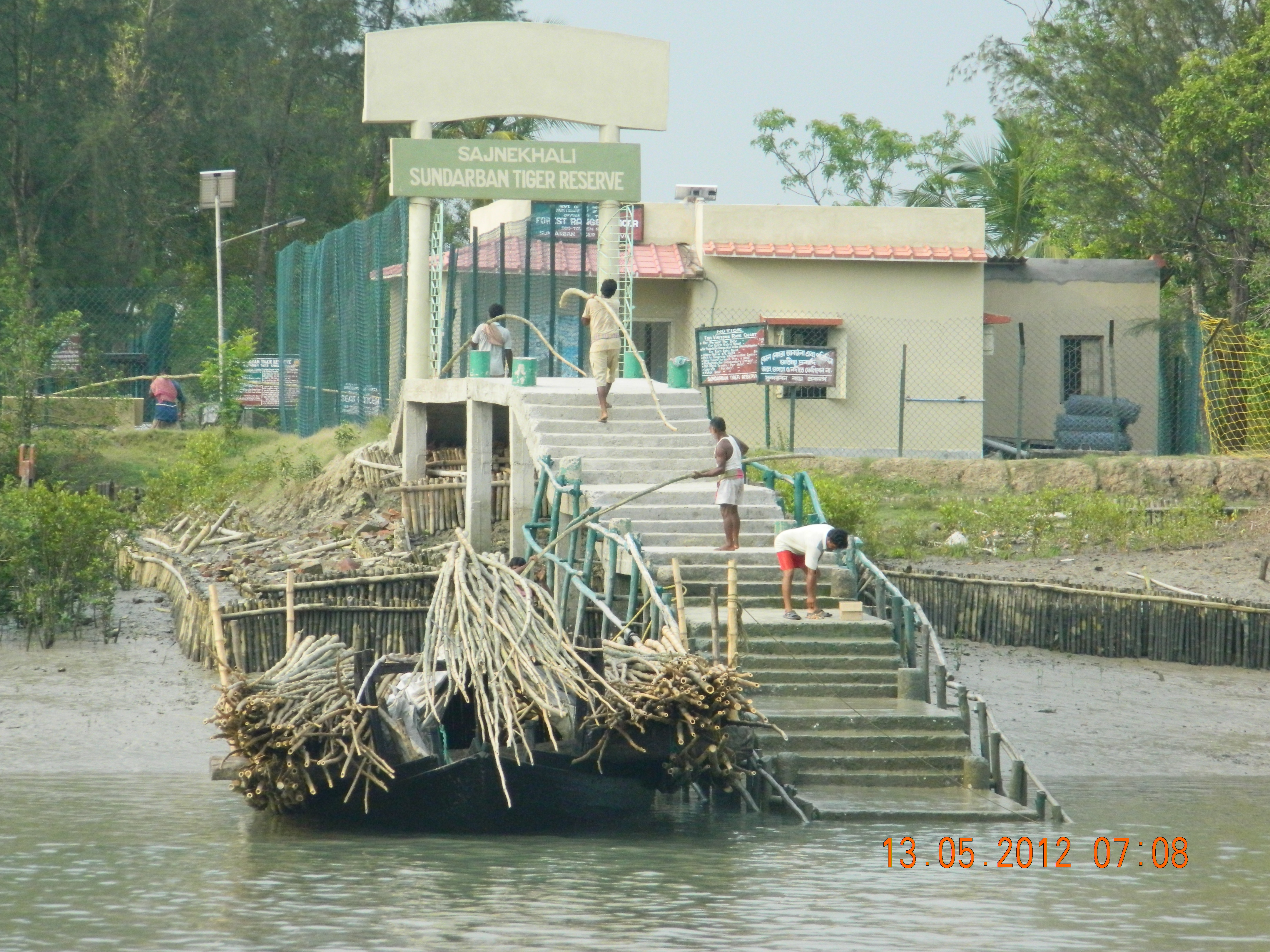 where the permission for the Sundarban trip needs to be taken. We reached Sajnekhali around 0700 hours. I realised one thing here – tiger reserves here(Sajnekhali, Dobanki and Sudhanyakhali) are quite purist in nature – a demarcated area, usage of nets is reserved for tigers where one can’t go for a safari. The reserve’s opening face is the only place where tourists can go and get some information and take pics. Though this may be a dismay for the most people, I laud it as it doesn’t disturb and intrude the natural habitat beyond a certain extent. At Sajnekhali, there is the residence of an IFS officer. Till date, I’m skeptical about the fieldwork capabilities of the IFS clan. Nevertheless, they enjoy royal treatment in the natural habitat of animals ! Mowgli introduced us to Mr. Mandal(referred to as Dada henceforth)
 , who was to be our guide for the rest of the tour. I was happy and I’m sure, Mowgli would have breathed a sigh of relief as I was pestering him with varied queries for the past entire day 😀 Dada took us to the nearby towers from where we could see one large River Terrapin(turtle). There was only one crocodile in a nearby pond, that too, didn’t surface ! I saw a young one of some lizard resembling the Comodo Dragon. Dada told me it’s scientific name, which obviously, I forgot within seconds ! Dada explained that to the north of Sundarban lie the 24 paraganas. This isn’t quite correct as paraganas are spread across the WB state(now includes even Assam etc.). To my dismay, there weren’t any fresh water reservoirs or spots where fresh water existed within the saline water ! Dada told me it is present only in the Bangladesh part of the Sundarban. The entire Sundarban area is divided into three areas – Buffered, Censored(Human entry allowed) and Core(No- entry for humans). Every March(15-30th), however, the honey collection is allowed in all the areas. But per head, a 40kg of honey@rs32/kg needs to be deposited with the government. Dada mentioned some prominent IFS officer and tranquilizer specialist, Gopal Tant during our conversation. The fishing is allowed for 9 months but only in the buffered area.There was a small temple of Bon Bibi(Bon-forest/jungle,Bibi – seniormost authoritative lady of a house,institution etc.), the deity of Sundarban. Her idol was accompanied by a few more characters like Gajhi Saheb, Dakkhini Rai, Dukhi and Shah Junglee.
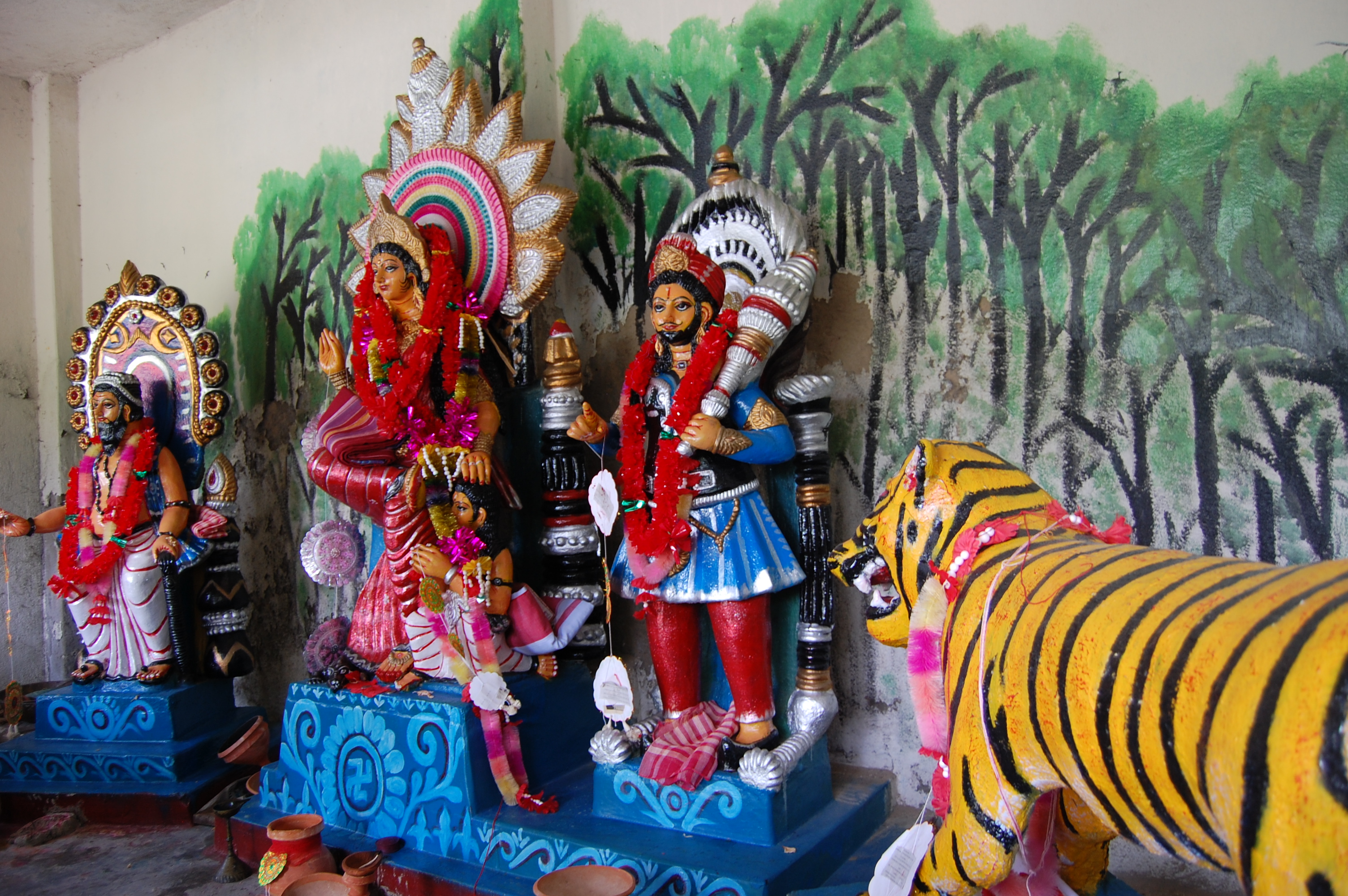 (courtesy : Anupam) All are Muslim deities but are worshipped equally by Hindus and people from other religions too. Bon Bibi is believed to be the Protector of human beings from the Nature’s wrath. There is a local play of 3-3.5 hours that depicts Bon Bibi and her miracles. Dada often referred to an English book about Sundarban written by one Biswadeep Roy Chowdhury(?). Around 0815, we left Sajnekhali and headed towards Dobanki tiger reserve. It was a lande creek ride with a T-junction arriving at an interval of 20-25 min. and we kept on our right. Elmar’s speed was around 5-6 mph.There was quite a variety of mangroves on the left part of the creek; I didn’t pay much heed to the right part as the chances of something ‘wild’ surfacing was only on the left part. Except for a few deers, we didn’t notice anything. The mangrove variety was quite evenly distributed. The ‘Goran’ were stunted but formed a majority followed by ‘Baen’ which had an average height of 25 feet. Lesser in numbers were ‘Pissur’ which had spiked/nail – like breathing roots and ‘Dhundul’ which had large, inedible fruits; both are used to create durable furniture( I was pissed :X ). I didn’t notice any ‘Sundari’ trees as they grow in areas of low salinity i.e Bangladesh side. The most incredible scene was formed by the ‘Hental’ trees – they form a really impenetrable green cover over miles, making it an ideal hide-out and vantage point for the wild cat
 . Mowgli napped all this time owing to his exertion and fatigue the previous day. Dada told me that Bhagbatpur was quite distant from our route and we can’t cover it 😦 After about 1.5 hr from Sajnekhali, we reached a point where water bed suddenly enlarged; on my enquiry, dada told me that it was a tri-junction of rivers – Gomati(the one that took us to Dobanki, South-West), Gomar(to Bangladesh, East) and Pinchkhaali(?).
 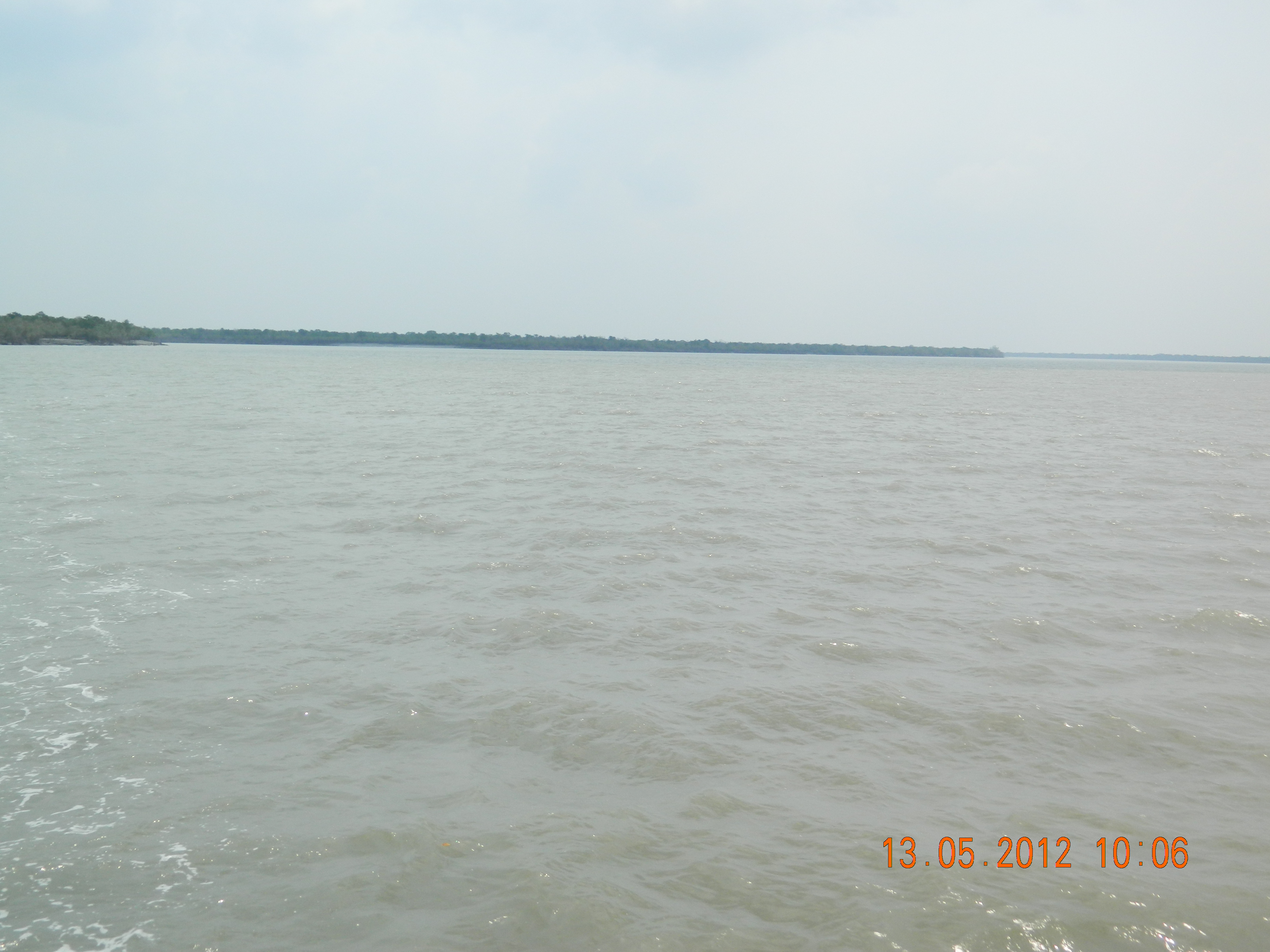 Later, Dada also later pointed at a bed of Gajhikhali. We reached Dobanki around 1130 hours
 . It had turned quite hot and humid by this time and we had started sweating. Dobanki just has an elevated alley covered with long wireframes on both the sides. Below, one can see the mangroves and sand on the left and on the right, at some distance, is the netted boundary from where the tiger reserve begins. Again, there wasn’t even a faint sign of the wild cat, as expected. Soon, we left Dobanki within 1/2 hr, we were at ‘Panchmukhani’ – the meeting point of 5 rivers
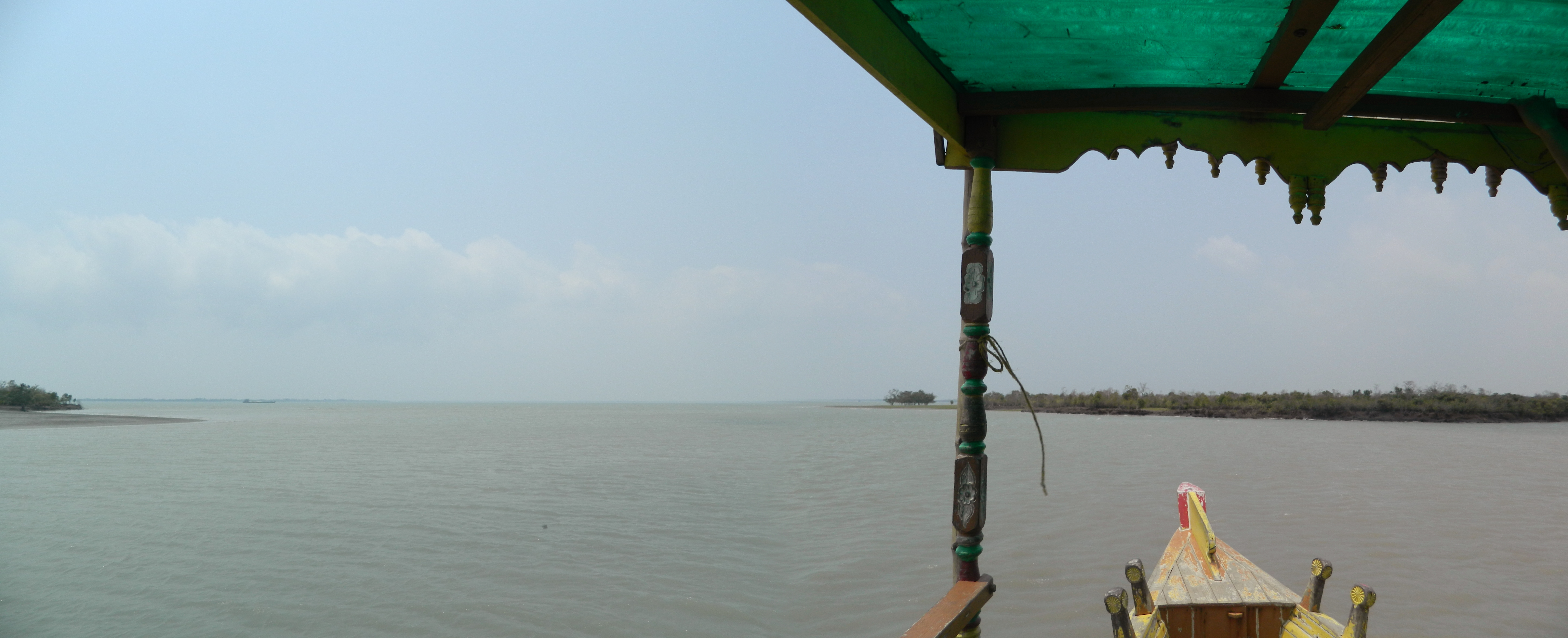 – Matla, Bidya, Gomati, Herobhangi and Khanokhali(our return path). It was almost 1230 and we started our return journey. We had our lunch in few time and again rested aimlessly. I spotted a spotted deer again, watching us innocently.At around 1430, we reached another watch-tower at Sudhanyakhali. The concrete tower here was uprooted during the last Aila strike and was being reconstructed. Then Mowgli asked us whether we should take a ‘right’ – a long way back(1hr 30 min.) or a ‘left’ – a short one(20 min.). Of course, we opted for the shorter one as we wanted to reach Kolkata ASAP. Elmar was anchored around 1530 hours from where we could see a resort just along the land. Pultu, the teenage captain of Elmar displayed some diving skills which left me envious ! We then set on the good old rickshaw towards Gosaba bajaar. On our way back, we visited the Hamilton school and residence – Hamilton was a (said)benevolent, pro-Communist Briton who wanted to transform the village into a self-sustaining economy(I wonder what it was then at that time !). We again crossed the creek in a boat, again overflowing with people, and reached Gothakali. This time, we travelled in a 13-seater Tempo Traveller, driven by a manoeuvre-master named Jehangir. While returning, he took the shorter route from Gothakali to Kolkata, opposed to Mowgli’s taste. We paid a price for it – frequent traffic jams prolonged our journey. The only village I remember is Baruipur. We reached Kolkata at around 2130 hours.
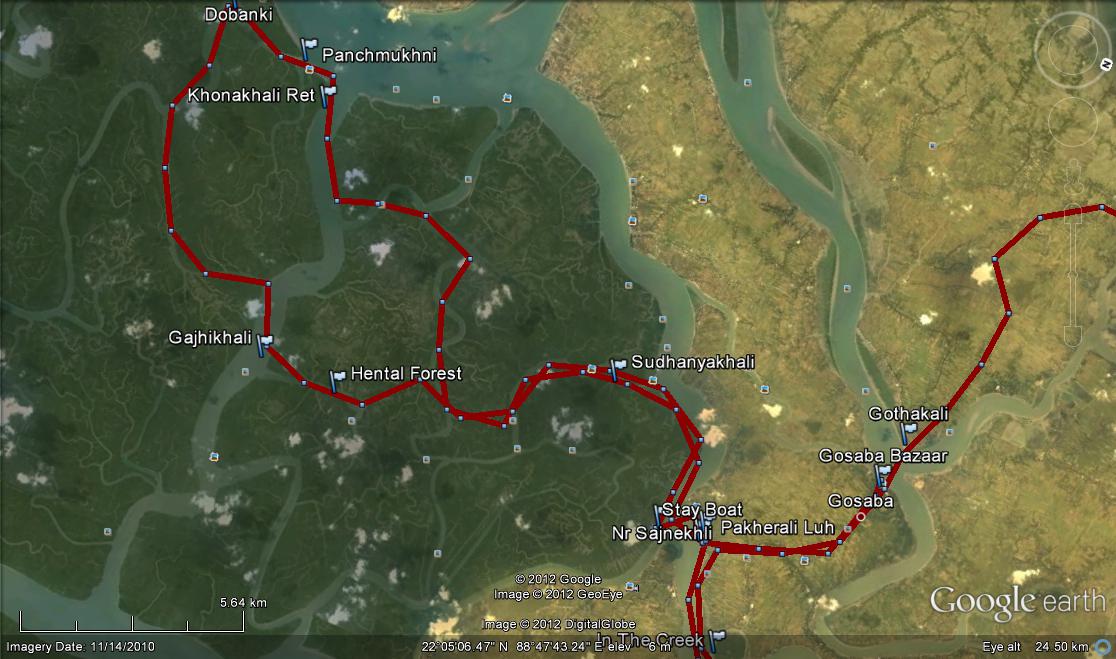
As I always learn, this tour too taught/revised a few lessons :
- Culture,economy etc. In India is about it’s villages – cities are just peripheral dummies. In other words, true India is in it’s villages !
- It is important to be at a place at the right time – summer isn’t the time to visit Sundarban(or any other place rich in wild life)
- It is desirable to get in touch with the men-at-field – the people who actually tread jungles, deserts, sea etc.To experience the real nature
 Life is about being kinetic
Hey Buddy!
Superbly written, I’m a big fan of these guys especially Ajay and Rajesh 😉 did a 3 days expedition in search of Tiger, didn’t get the tiger got few new friends. I will definitely be back Guys!!!
Keep up your good work 🙂
LikeLike
Hi,
Nicely written… only one correction.. Baruipur is not a village .. it is south 24 parganas district town and within greater Kolkata (700144).
LikeLike
Well written, more facts , no encounter with the wild cat, isn’t it ?loved reading it.Keep writing about your travels ,it inspires many to a
take trip into the lap of nature.
LikeLike
Hi there, I enjoy reading through your post.
I wanted to write a little comment to support you.
LikeLike